
Every account that grows on X eventually accumulates bots. The arrival rate scales with visibility, the impact on analytics is silent, and the longer the cleanup is postponed, the more distorted the engagement metrics become. Running a structured bot audit is the only reliable way to reverse the drift.
What this guide gives you.A structured Twitter bot audit workflow that runs in about thirty minutes.Multi-signal classification that combines account age, tweet count, ratio, and activity.A review-then-act process that prevents accidental removal of real accounts.
Built on Circleboom's official X Enterprise Developer access. Start with the Twitter bot audit workflow.
What Happens If You Skip the Bot Audit
The cost is structural and compounds over time. Bot followers depress your engagement rate because they never interact with content. Bot accounts in your following list dilute the recommendation signal you give the platform. Bot engagement on individual posts makes your content look stronger than it is to real audiences, which leads to incorrect content decisions downstream.
The reputational layer matters too. Brand partnerships, sponsorships, and collaborations increasingly include audience-quality checks. A high follower count paired with a thin engagement rate signals bot accumulation, and the conversation tends to stall once the gap is visible. Running a quarterly audit closes that gap before it becomes a credibility problem.
The platform-side enforcement helps but does not cover the whole problem. X's transparency reporting shows platform sweeps catch millions of accounts per period, but the cadence of those sweeps and the categories they target do not match the user's audit needs. The user-side audit is what fills the gap on your specific account.
The Twitter bot audit workflow is the structured version of the cleanup, with multi-signal classification, profile-level review, and rate-limit-aware bulk action all in one dashboard.
How to Run a Twitter Bot Audit Step by Step
Four actions, three are one-time setup. The audit itself takes about thirty minutes per pass.
Connect your X account to Circleboom
- Log in to Circleboom Twitter and authorize your X account with official OAuth.
Open the bot-checker dashboard
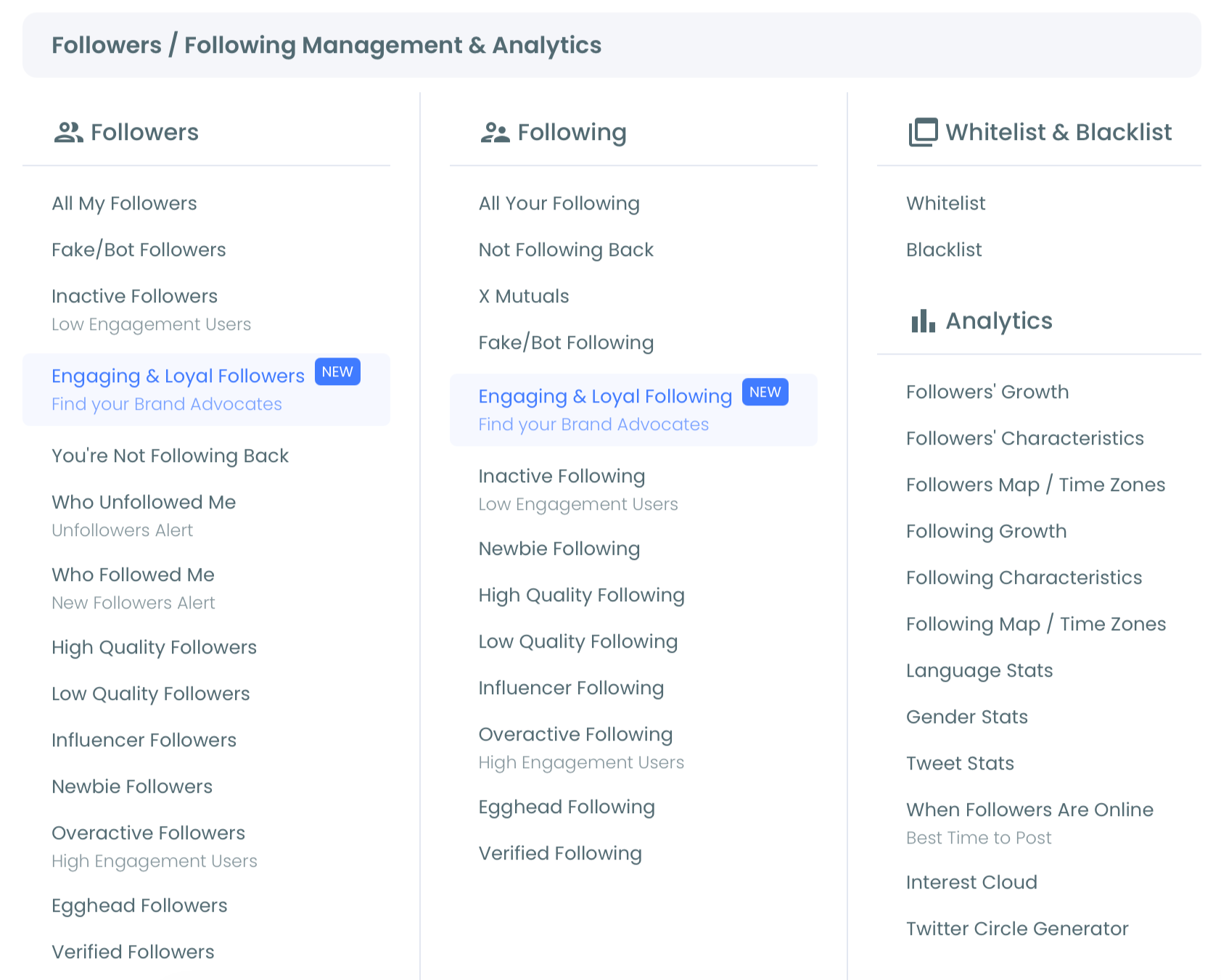
- Open the Follower / Following Management and Analytics menu and click into the bot-checker view to load the multi-signal classification.
Review the flagged accounts profile by profile
- Scan the suspicious-account list and validate each entry against its profile signals (account age, tweet count, follower-to-following ratio, activity, bio content). The classifier is data-driven but probabilistic, so the review step prevents false-positive removal.
Apply the bulk action to confirmed bots
- Bulk-remove confirmed bots, blacklist repeat offenders, or unfollow bot accounts on the following side. The action runs within X's published rate limits so the cleanup stays compliant.
That ordering is the working structure. The login earns sanctioned API access. The dashboard loads the classification. The review prevents over-removal. The action layer is where the audit becomes cleanup. Skipping the review step is the single most common audit mistake.
Hands-on demo: how the multi-signal classifier surfaces suspicious accounts and supports the review-then-act audit pattern.
What a Good Audit Produces
The first measurable outcome is the engagement-rate correction. Removing inauthentic followers shrinks the denominator, the real-interaction numerator stays roughly the same, and the rate improves visibly within a week or two of cleanup.
The second outcome is the analytics-accuracy improvement. Future content decisions get made on the cleaned base, which means the signals you read (top-performing posts, audience demographics, best-posting-time inferences) all reflect real audience behavior instead of bot-inflated noise.
The third outcome is the credibility layer. Audience-quality checks during brand or partnership conversations land better when the follower-to-engagement ratio is healthy. That has hard-dollar implications for accounts that monetize through collaborations or sponsorships.
The fourth outcome is the recurring discipline itself. The first audit catches the accumulated bot population. Subsequent quarterly audits catch the new arrivals, which keeps the account at a clean baseline instead of drifting back to a distorted state.
Circleboom is an official X Enterprise Developer company, so the retrieval and action layers run against X's published platform limits. The same dashboard surfaces a Twitter follower quality view for the broader quality axis and a newly-created Twitter accounts (newbies) view for the age-axis filter that often correlates with bot signals.
X's official platform manipulation policy defines what counts as inauthentic behavior, which is the rule set the audit targets. TechCrunch's reporting on the persistence of verified-bot problems on Xconfirms that even paid verification does not eliminate the need for user-side audits. The Stanford academic baseline on Twitter influence provides the methodological context for how engagement-pattern detection works at scale.
Run the structured Twitter bot audit is the page that handles the workflow end to end.
Related Circleboom reading that extends the audit angle:
- how to spot fake Twitter followers on individual-account verification.
- fake followers audit on Twitter on the broader audit context.
- how can I distinguish fake accounts from real ones on Twitter on the review-step heuristics.
- should I block fake Twitter X followers on the block-vs-remove decision.
Common Questions About Bot Audits
How long does a Twitter bot audit take?
About thirty minutes per audit for the typical account, including the review step. Larger accounts take proportionally longer, but the bulk-action support means even very large follower bases stay manageable.
Does the audit work on the following list too?
Yes. The dashboard surfaces bot signals for both follower-side and following-side accounts. Auditing both sides is recommended because following bots dilutes your timeline signal as much as follower bots dilute your engagement rate.
What if I remove a real account by mistake?
The action is reversible the same way any unfollow is on the platform. You can re-follow accounts that turn out to be real, and the bot-checker dashboard supports adding accounts to a whitelist to protect them from future audits.
Can I run the audit on a Twitter account I do not own?
No. The audit requires authorized API access to the target account, which means it works on accounts you have connected through OAuth. Other accounts' audit data is not accessible through this workflow.
Do bots ever get verified?
Yes. Verification reflects a payment or identity-confirmation step, not behavioral authenticity. Verified accounts can still be bot-operated, which is why the audit cannot rely on the verified badge as a quality signal.
Your Audit Action Checklist
The short version. Run through it once per quarter to maintain a clean baseline.
- Connect your X account to Circleboom. One time.
- Open the bot-checker dashboard. Per audit.
- Review the flagged accounts, not bulk-act on them. Mandatory.
- Remove confirmed bots, blacklist repeat offenders, whitelist borderline real accounts. Per audit.
- Re-audit on a quarterly cadence. Recurring.
Set up your Twitter bot audit workflow and the silent bot accumulation that distorts your analytics becomes a measurable, recurring cleanup instead of a chronic problem.
The audit also has compounding value on the data side. Each pass produces a clean analytics baseline for the period that follows, which means content-performance reads, audience-demographic estimates, and posting-time inferences all reflect real audience behavior. That data quality is what justifies the recurring discipline more than any single cleanup result on its own.