
No, there is no x official way to see unfollowers as a historical list inside X. X can show your current follower count and current followers, but it does not give you a dated record of each account that left.
That distinction matters when you are trying to decide whether a drop is ordinary churn, a platform cleanup, or a response to something you posted.
No, X does not provide a native historical report of who unfollowed you. Circleboom compares stored follower snapshots on Twitter/X and identifies accounts missing from later snapshots using official X Enterprise APIs.
→ x official way to see unfollowers
Keep reading to see why a current follower list cannot recreate a past unfollow event.
The useful answer is not simply "use a tracker." It is to understand the difference between a live list and a change log. A current follower list cannot reconstruct a past unfollow event on its own.
What X officially lets you inspect
X lets you see the followers you have now, along with the count shown on your profile. It also lets you receive new-follower notifications, depending on your notification settings.
What it does not provide is an inbox alert saying that a specific person unfollowed you, nor a built-in page that compares yesterday's followers with today's.
The X Following FAQ describes follow relationships and notes that X does not notify an account when someone unfollows. That makes manual checking a poor diagnostic method.
You can notice that a number changed, but you cannot reliably identify the accounts behind that change after the fact.
Circleboom makes the distinction explicit: Circleboom records Twitter/X follower-list changes over time, while X supplies the live relationship state. That is why a monitoring method must begin before the event you want to inspect.
If you want the record in place before the next unexplained change, see who unfollowed you on X. The goal is not to turn ordinary audience movement into a daily alarm.
It is to keep enough historical evidence to investigate a real change calmly and accurately when one occurs.
Current state is not change history
If you only need to understand the current size and shape of your audience, Twitter Follower Stats is a useful companion page. It answers a different question: how your audience is changing overall, rather than which individual accounts departed.
Why a follower-count drop is not an explanation
A count is a summary, not evidence. A decline of 50 followers might represent quiet, normal churn.
It might also follow:
- a campaign;
- a change in posting frequency;
- a topic shift;
- an account deactivation wave; or
- X removing suspicious accounts.
The same number can describe very different situations.
That is the gap most generic answers miss. The question is rarely "Who left?" in isolation. A creator or social media manager usually wants to know whether the people who left were:
- engaged;
- relevant;
- inactive; or
- part of one unusual cluster.
How to see who unfollowed you on Twitter is useful when you need the basic tracking workflow. For analysis, though, do not treat every departure as a verdict on your content.
A single account is noise.
A patterned group is worth examining.
The first useful unit of analysis is the time window, not the individual username.
Use a narrow window after:
- a launch;
- a controversial post;
- a new content series; or
- a posting-frequency change.
Then ask whether the accounts in that window share useful traits.
Useful traits include:
- activity;
- follow ratio;
- location and language;
- verification status; and
- follower counts.
They can provide context that a net count never will.
How Circleboom creates an unfollower record
Circleboom's Who Unfollowed Me feature compares stored follower snapshots with later data. When an account that appeared in an earlier snapshot is no longer in the current list, the feature can show that change in a structured table.
The feature's list is a monitoring record, not a claim that X itself generated an unfollow notification.
The table keeps the account-level evidence beside the filtering controls. You can sort or narrow the review before exporting it, rather than copying names into a spreadsheet and trying to remember what each one represented.
For client work, that difference turns a reactive question into a reproducible review process.
Circleboom also provides daily or weekly email summaries for unfollower alerts. That passive layer is valuable for people who manage an account regularly but do not want to inspect a dashboard after every small change.
Why data timing affects the conclusion
Because this article is about data history, the trust question is real. Circleboom uses official X Enterprise APIs for its audience-monitoring workflow, which matters when you are connecting data instead of handing credentials to an unknown scraper.
The practical alternative is ready when you are: monitor X unfollowers over time. It works best as a standing measurement layer, not as an emergency search after every one-person dip.
Use the evidence before deciding what happened
The feature uses official X API data and updates follower data daily. That introduces an important practical limit: a very recent unfollow might not be visible until the next sync.
It also means a small number of apparent changes can be corrected on a subsequent fetch when X data is temporarily inconsistent.
This is why an honest workflow has two parts:
- Track changes over time instead of trying to reconstruct them later.
- Review a cluster before treating it as a content signal.
- Keep the source data if the finding will inform a client report or campaign decision.
Fast answers are less useful than a record you can verify.
For a broader view of the feature category, Twitter follower tracker explains why monitoring and audience review belong together. The monitoring result tells you what changed. The audience context tells you whether the change deserves a response.
How to use the x official way to see unfollowers alternative
The practical alternative to an unavailable native X report is a tracker that starts building history and then lets you filter the resulting change list. Circleboom's workflow is designed for that sequence.
Connect the account you want to monitor
- Log in to Circleboom Twitter and connect the X account whose follower changes you want to review.

The historical view begins after the account is connected and snapshots can be compared. No service can accurately produce a complete prior history from a follower list it never recorded.
Open the follower and following workspace
- Go to the Follower / Following Management and Analytics menu, then open Who Unfollowed Me.
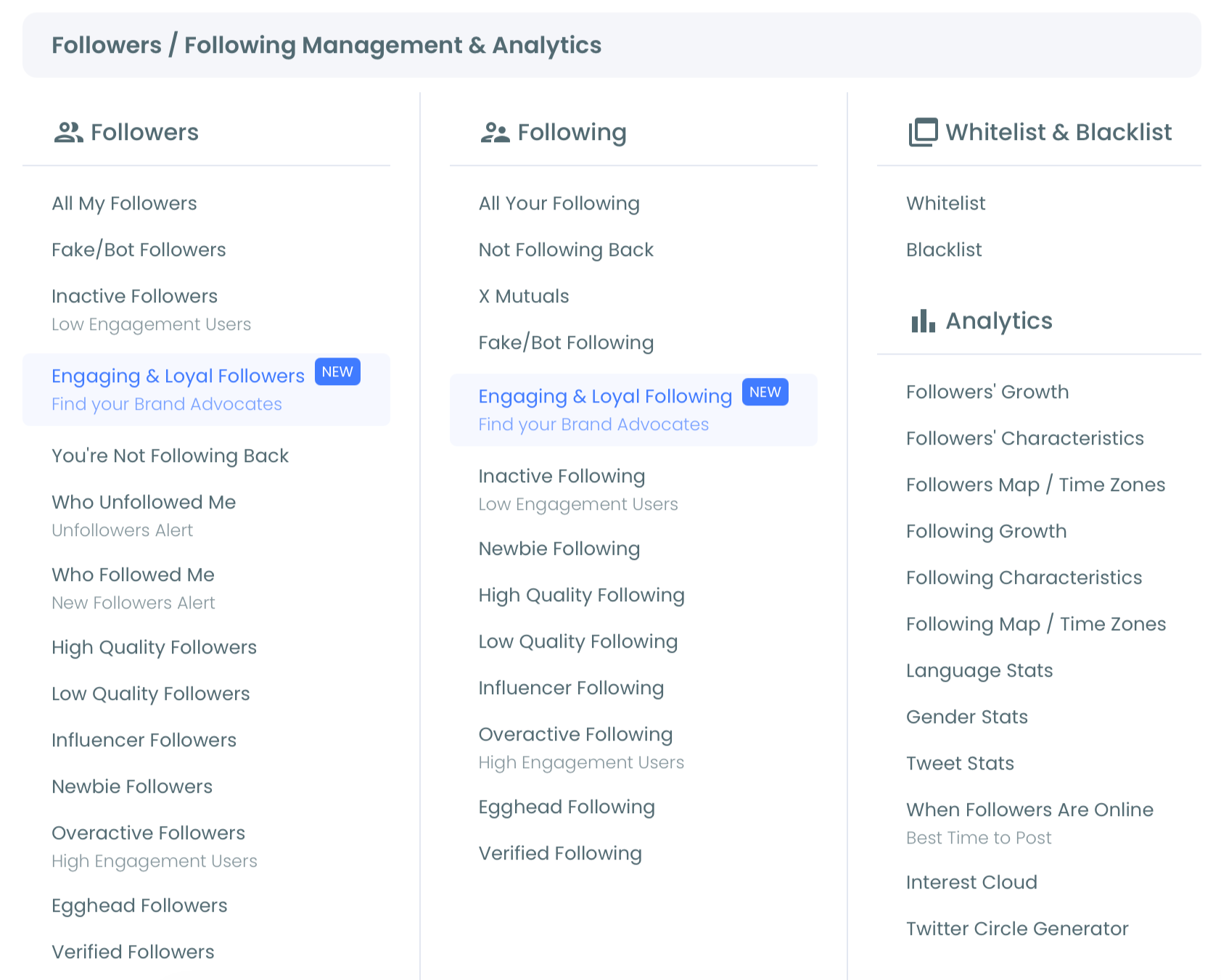
The page shows accounts that were previously in your follower data and later disappeared. Circleboom turns that Twitter/X relationship change into a reviewable table rather than a vague count decline.
Choose a time period before reading the list
- Select a period such as:
- the last day;
- week;
- two weeks;
- month; or
- six months or year.
Start with the smallest period connected to the event you are investigating.
This is where many reviews go wrong. A six-month list may be accurate, yet it blends ordinary churn with the question you actually have. If a campaign ended last week, use the week first and widen the range only if the pattern remains unclear.
Filter for the kind of loss that matters
- Use Filter Options to narrow by:
- follower quality;
- verification status;
- follower count and follow ratio;
- join date and engagement; or
- language, location, or text in the bio and name.
The active-filter bar is not cosmetic. It is your audit trail while deciding what the results mean.
An engaged, high-reach account in a priority location may be relevant to retention work. A batch of empty, inactive accounts may point to background cleanup rather than audience rejection.
Export or take a measured follow-up action
- Export the filtered result as CSV when you need a record for analysis or reporting. The export uses Circleboom tokens, and the remaining token balance appears alongside the control.
You can also take these actions where that relationship still exists:
- follow;
- add to a list;
- whitelist or blacklist; or
- export or unfollow accounts.
Do not turn the list into an automatic retaliation queue.
Circleboom processes unfollows at 50 actions per 15 minutes, up to 800 per day, so review first and act only when the relationship decision is intentional.
For mobile-focused setup ideas, how to track Twitter unfollowers on iPhone covers the same need from a phone user's perspective. The strategy does not change: capture history first, then interpret the change.
Watch the walkthrough: tracking X unfollowers from a recorded history.
A simple test for interpreting unfollow data
Use this three-question test before changing your strategy. It helps separate a meaningful retention signal from a normal platform event.
| Question | What to inspect | What it may mean |
|---|---|---|
| Did departures cluster in one period? | Date filter and your post or campaign calendar. | A content or campaign event may deserve review. |
| Did the accounts share characteristics? | Engagement, quality, language, location, and follow ratio. | The loss may be concentrated in one audience segment. |
| Did follower growth change too? | Net follower trend alongside the unfollower list. | You may be exchanging one audience for another, rather than simply losing reach. |
This framework is the information gain that a raw unfollower list cannot provide. A dashboard can name accounts, but only a comparison against timing and audience composition turns the list into a decision.
The Who follows whom on X discussion is a useful next read when your concern is reciprocity rather than retention. Those are related, but they should not be mixed.
Someone not following you back today is not proof that they previously followed and then unfollowed.
When the official answer is still enough
Sometimes the native X view is sufficient. If you only want to check your present follower count or browse who follows you now, open the follower list on X.
If a new-follower notification later points to an absent account, X says it may be hidden for spam activity, unfollowed, or deactivated in its common following issues guidance.
That caveat is another reason to avoid over-reading one disappearance. An account can leave the visible relationship for several reasons. A good unfollower workflow gives you history and context, then leaves room for uncertainty where the platform itself has not supplied a definite cause.
If you want to keep a live view of audience changes beyond individual losses, Twitter Follower Tracker connects the person-level question with ongoing audience monitoring. Use it alongside the individual list, not as a substitute for it.
The answer to take forward
X does not have a native historical unfollower report, so there is no x official way to see unfollowers that can retroactively name everyone who left. There is an official way to inspect your current relationships, and there is a safer monitoring approach for future changes:
- start tracking;
- use time windows; and
- judge patterns before taking action.
The strongest response to a follower dip is not to chase every account. It is to learn whether a meaningful audience segment moved, why the timing matters, and whether your content strategy needs a change.
→ start tracking who unfollowed you on X
Questions people ask about X unfollowers
Can X notify me when someone unfollows?
No. X does not provide a native notification for individual unfollows. Circleboom can send daily or weekly unfollower alert summaries after it has begun tracking your account's follower changes.
Can I see who unfollowed me before I started tracking?
Not as a reliable, complete history from X alone. A tracker needs earlier and later follower snapshots to identify the relationship change.
Are all accounts on an unfollower list definitely people who chose to leave?
No. An account may have unfollowed, been deactivated, or become unavailable through spam-related platform handling. Review the timing and account context before making a conclusion.
Can I export the accounts that unfollowed me?
Yes. Circleboom can export the filtered unfollower view as a CSV, subject to the export token balance shown in the product.