Tracking who unfollowed me on Twitter used to mean scrolling follower lists by hand and hoping memory filled the gaps. X still doesn't notify anyone when a follower quietly leaves, so the visibility problem hasn't changed, only the tools around it have. This guide walks through the fastest, safest way to see who unfollowed you in 2026 and what to do with the data once you have it.
What this guide gives you:The one Circleboom feature that turns invisible unfollows into a dated event logA 5-step flow for spotting unfollowers and taking follow-up action without risking rate limitsA diagnostic angle most tool round-ups skip: connecting unfollow spikes to specific posts
Built on Circleboom's Who Unfollowed Me, delivered through the official X Enterprise API. Start with the who unfollowed me on Twitter tracker.

Why Twitter (X) Won't Tell You Who Unfollowed
X's product philosophy treats the follower relationship as mutual courtesy: new follows generate a notification, unfollows do not. The X help page on following people covers how to follow or unfollow but says nothing about detecting when someone drops you. That asymmetry is by design, and it keeps timelines emotionally neutral. It also leaves creators, brands, and agency managers staring at a follower count that ticks down without any way to see which account left or when.
Manual workarounds exist but none hold up at scale. Checking a profile for the "Follows You" label works for one account; repeating that sweep across a 2,000-person followers list is impossible on a schedule. Third-party apps fill the gap, but the quality gap between them is large. Some scrape, some miss historical events, some ask for credentials they shouldn't need. What the reader actually needs is a tool that pulls follower data through the official X API, snapshots it on a schedule, and surfaces differences as a readable timeline. That's where an unfollower tracker for Twitter with official API access earns its seat.
How to See Who Unfollowed Me on Twitter (Step by Step)
Circleboom's Who Unfollowed Me tool snapshots your follower list through the official X Enterprise API, compares the current list against previous captures, and surfaces every unfollow as a dated entry you can filter and act on. Circleboom is an official X Enterprise developer, so every pull runs on sanctioned data access, not scraping. That matters when you start taking follow-up actions (unfollow back, block, add to a list) because those actions also run through authorized endpoints with built-in safety limits.
Each unfollower row carries the full profile picture: username, display name, bio, follower/following counts, tweet count, account age, and verification state. That's enough signal to decide in a glance whether a departure is meaningful or noise. Time filters narrow the view to the last 24 hours, 3 days, week, or month, and you can layer keyword, location, and language filters on top.
Video walkthrough: the exact sequence that turns a silent unfollow into a dated, filterable event inside Circleboom.
Here's the flow, in order.
Connect your X account to Circleboom
Log in to Circleboom Twitter and connect your X account through official OAuth.
No password handoff, no third-party credentials.
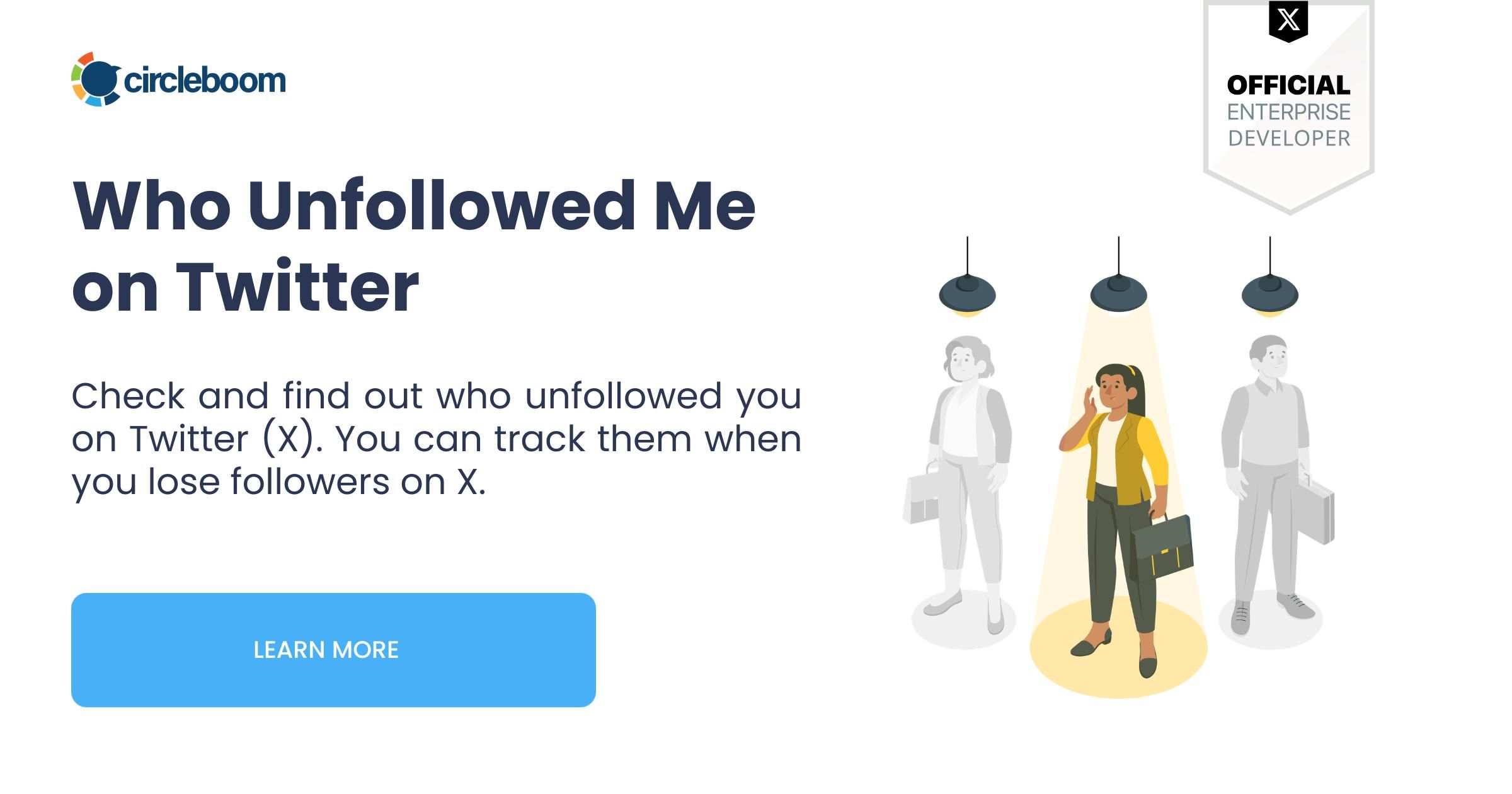
Open the Follower & Following Management and Analytics menu from the left dashboard.
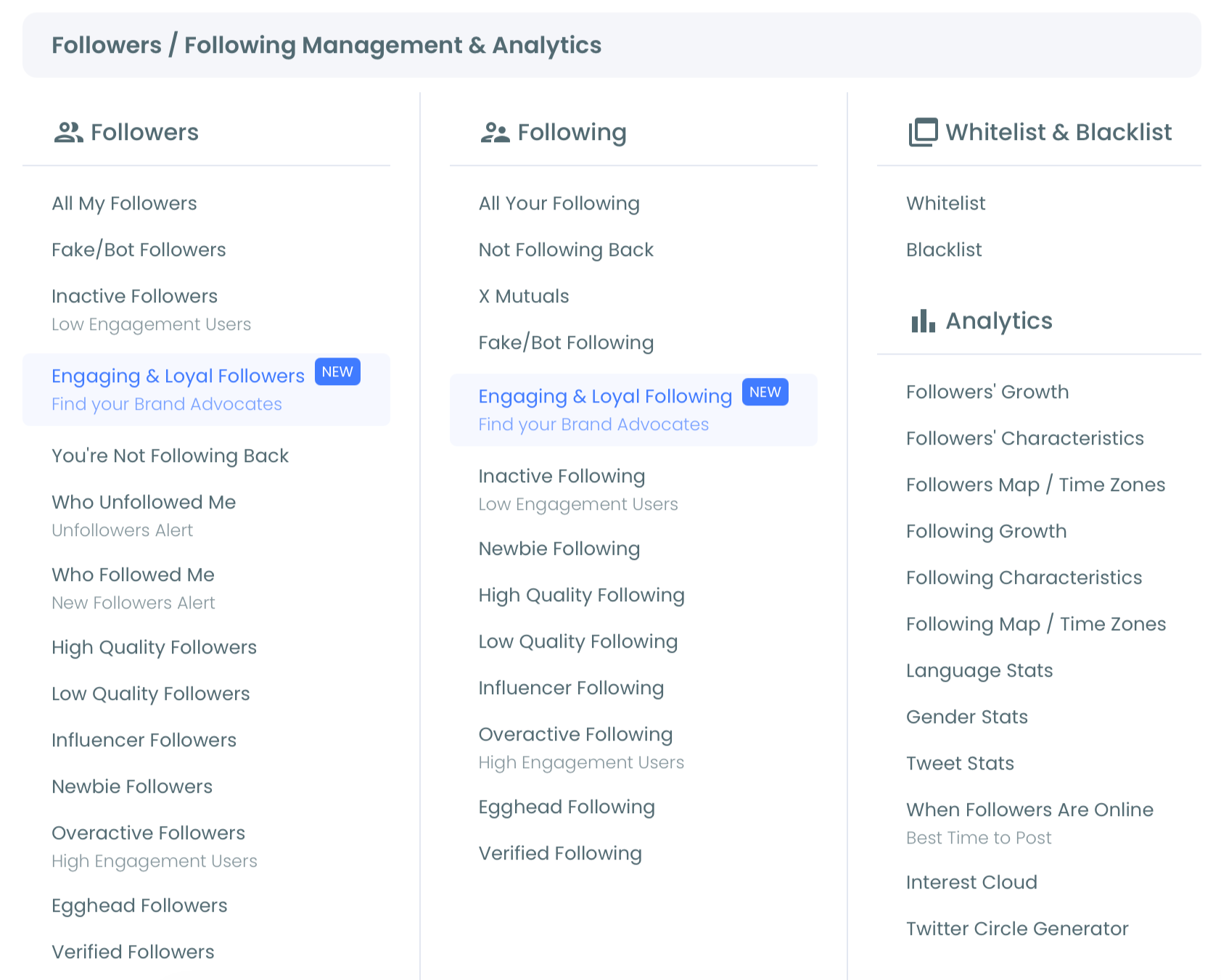
Open the Who Unfollowed Me dashboard
Select Who Unfollowed Me from the Audience Insights group. The dashboard loads the current unfollower list pulled against the last snapshot.
Filter the list to what matters
Apply a time filter (24 hours / 3 days / week / month) and optional layers for verification, account age, language, or location to narrow the list to departures that actually matter.
Decide what to do next
For each row, pick a follow-up: unfollow the account back, add it to a monitoring list, block if it's spammy, or export the full list as CSV. Safe limits apply automatically (around 50 unfollows every 15 minutes, up to 800 per day).
That sequence works because the login earns official-API access first, the menu load primes the snapshot comparison, the filter narrows the scope before you act, and the bulk-action layer respects X's own rate limits so nothing spikes an account warning. Skip any of those and you either lose accuracy or risk a temporary restriction.
Quick recap of the flow:
- Connect with official OAuth.
- Open Who Unfollowed Me under Audience Insights.
- Apply time + account-quality filters.
- Pick a follow-up per row (unfollow back, add to list, block, export).
- Let Circleboom's rate pacing run automatically.
Unlike scrolling through your followers list hoping to spot who's missing, the Who Unfollowed Me dashboard shows every drop as a timestamped row with one-click follow-up. That's where the see who unfollowed me on Twitter workflow pays off: minutes instead of hours, every departure attributed to an actual account with a timestamp.
Why Tracking Unfollowers Matters for Your Strategy
An unfollow isn't data until you pair it with a cause. A 0.3% drop over a week reads as noise; a spike of 40 unfollows on a day you pushed a specific post reads as a signal. The feature's real value is the diagnostic loop: see the departures, scan them against your recent content, find out which posts actually cost you followers versus which drops were unrelated churn. Most round-up articles skip this part, which is why pulling the data matters more than collecting it.
Net growth tells a cleaner story than gross loss. Pairing who unfollowed me on Twitter tracking with the new followers on Twitter check shows whether your audience is shrinking or reshaping. A day that loses 40 and gains 60 is healthy churn, not a crisis. Agencies running multi-account work especially need this framing; a client looking at one unfollow headline will panic, while the actual net trend might be fine. You can read the fuller case for this kind of audit in the Twitter follower tracker explainer and the broader follower tracker round-up.
When the analysis turns up patterns (specific post types that consistently cause unfollows, specific weeks where churn clusters), the next move is the Twitter unfollower alerts layer. Daily or weekly email summaries remove the need to log in and check manually; you only open the dashboard when the alert flags something worth looking at. Readers on mobile can follow the track Twitter unfollowers on iPhone flow for the mobile-first version, and the best tool for monitoring Twitter unfollowers comparison covers the ongoing-monitoring options if you want a broader survey. When the same accounts keep cycling in and out, the who follows whom on X tracker explainer shows how to widen the audit to cross-account behavior.
 Altug Altug
What You Get After Running a Who Unfollowed Me Audit
You stop guessing. Instead of watching a follower count tick down and wondering what happened, you have a dated list of every account that left, filterable by time, with the account context you need to decide whether the departure matters. That alone saves the weekly "what happened to my numbers" cycle most creators and brand managers run.
You also gain a decision record. The CSV export feeds reporting, stakeholder reviews, and month-over-month audits that don't rely on screenshots. For agency teams managing five or ten client accounts, the export is the difference between a defensible client retention story and vague qualitative hand-waving. Circleboom's follower growth stats dashboard pairs with the export to tie unfollow events back to campaign dates.
Most importantly, you stop reacting to every unfollow. Treating each departure as a crisis burns energy that belongs on content. With a dated list in front of you, the instinct shifts: you look for patterns, not single events, and you act only when the pattern tells you to. That's what separates a stable audience-management workflow from emotional whack-a-mole.
Your Next Move
Tracking who left your following is a 5-minute job once the right tool is wired up, and the data unlocks decisions you can't make from a raw follower count. Circleboom is an official X Enterprise partner, so the whole workflow runs on sanctioned API access: safe, compliant, and defensible.
What to run this week:
- Connect once, set an unfollower alert to weekly, and let the email do the surface scan.
- The first time the alert flags a cluster, cross-check the dates against your recent posts.
- Export the month's unfollower CSV before every stakeholder review.
- For active pruning, pair Who Unfollowed Me with the unfollow tool for non-following-back accounts workflow.
→ Track who unfollowed me on Twitter
infocircleboom.comQuick Questions About Tracking Unfollowers
How fast does Circleboom detect a new unfollow?
Unfollows appear in the dashboard within the snapshot comparison window, typically on a daily cadence with a fresh pull on each dashboard load. Historical unfollows from before you connected the account are not retrievable because no snapshot exists to compare against.
Can I filter the unfollower list by time range?
Yes. The time filter covers the last 24 hours, 3 days, 1 week, and 1 month, and you can layer filters for language, location, account age, verification status, follower count, following count, and tweet count on top of that.
Is it safe to unfollow accounts back in bulk?
Yes, when you stay inside the rate limits Circleboom enforces automatically (about 50 unfollows every 15 minutes and up to 800 per day). Those limits match what X itself considers safe behavior, and going above them is what triggers restrictions, so Circleboom simply won't let you push past them.
Can I export the unfollower list as CSV?
Yes. Any filtered view of the unfollower list exports to CSV with the account's username, display name, bio, follower/following counts, tweet count, and account age. Everything you'd need for a reporting spreadsheet or a CRM import is included.
Do I need to keep Circleboom open to track unfollowers?
No. The unfollower alerts feature sends a daily or weekly email summary of who unfollowed you, so the dashboard only needs to be opened when the alert flags something worth acting on.