
The Architecture Problem Behind “Software for Social Media”
I remember the exact moment I paused mid-scroll.
It was a simple Reddit thread in r/SocialMediaMarketing:
“What software do you use to manage and automate all social media accounts?”
What software do you use to manage and automate all social media accounts?
by u/rousanali in SocialMediaMarketing
The question looked harmless.
The answers were not.
Buffer.
Hootsuite.
Sprout Social.
Publer.
SocialPilot.
Vista Social.
HubSpot.
Zapier stacks.
Custom-built dashboards.
Free tools.
Enterprise suites.
Founder-built side projects.
Everyone had an opinion.
But what struck me wasn’t the variety.
It was the undertone.
Confusion.
Fragmentation.
And the quiet anxiety of people managing too many accounts with too many tools that almost solve the problem.
I have lived inside that problem.
For years.
When “Software” Really Means “Survival”
When someone asks about software for social media, they rarely mean scheduling.
They mean survival.
I’ve managed multi-platform campaigns across:
- X
- TikTok
Client accounts.
Brand accounts.
Personal authority accounts.
Product launches.
Evergreen funnels.
Crisis responses at 2am.
Choosing software for social media should be simple.
List features.
Compare pricing.
Pick a plan.
But it’s never about features.
It’s about workflow coherence.
The Hidden Cost No One Talks About
The Reddit thread reflected the typical fragmentation of the market:
One person likes Buffer for the free plan.
Another prefers Sprout Social for enterprise listening.
Someone recommends HubSpot if budget allows.
Others suggest Zapier automation stacks.
A founder promotes their niche Twitter tool.
This is the market.
Specialized tools solving slices of the puzzle.
But here’s the advanced truth most marketers eventually discover:
The real cost of software for social media is not subscription fees.
It’s cognitive load.
Every additional dashboard fractures your focus.
Every separate login adds friction.
Every disconnected analytics panel breaks strategic clarity.
I once ran a campaign where we used:
- One tool for scheduling
- Another for analytics
- A third for engagement
- A fourth for cross-platform repurposing
On paper, we were optimized.
In reality, we were exhausted.
And worse, we were slow.
Speed compounds in social ecosystems.
Fragmentation destroys speed.
When workflow fragments, strategy fragments.
You can see your X analytics on Circleboom, and you don't need to have a Premium subscription ⬇️
 Arif Akdogan
Why Most Software for Social Media Fails Growing Brands
Here’s the pattern I’ve seen repeatedly:
- Teams start with free software for social media.
- They outgrow it.
- They patch in another tool.
- Then another.
Eventually, they create a Frankenstein stack that technically works but strategically leaks time.
The deeper issue?
Most software for social media is built around features, not systems.
You get:
- A scheduler
- An inbox
- Basic analytics
- Cross-posting if you upgrade
But very few tools ask the core modern question:
How do you manage multiple platforms as one integrated growth engine?
Because cross-platform marketing is not duplication.
It’s orchestration.
And orchestration requires unified control.
The Turning Point: Thinking in Systems
My shift came when I stopped asking:
“What features does this tool have?”
And started asking:
“Can this serve as my central command center?”
That’s when I seriously tested Circleboom Publish.
At first glance, it looked like another scheduler.
But one detail mattered.
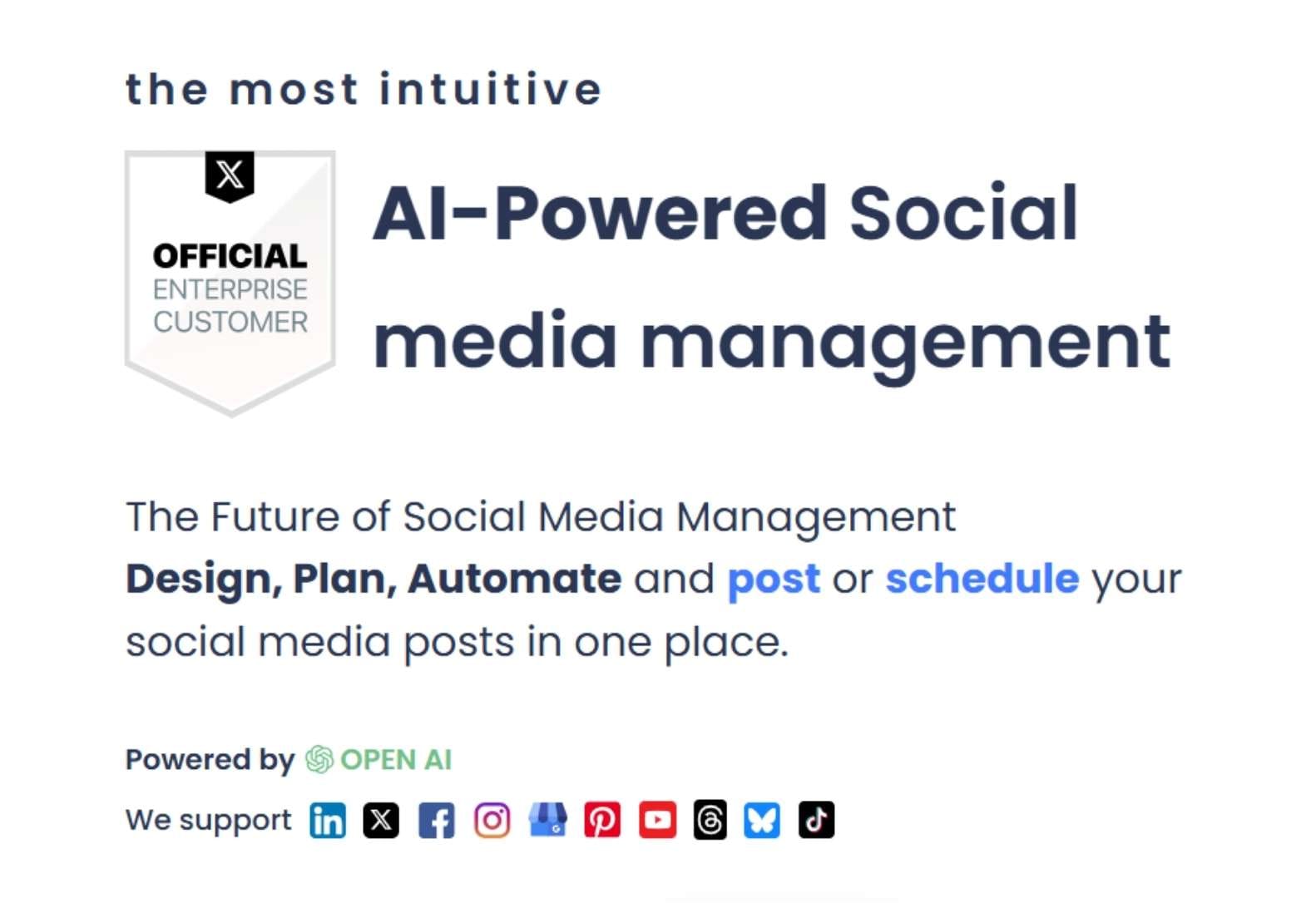
Circleboom is an official Twitter Enterprise client operating through official Enterprise APIs.
For professionals who understand unstable API workarounds, that detail is not cosmetic.
Keep in mind that the API provides a more accurate real-time data stream than the X interface itself. While the platform UI may experience lag, the API captures and reflects new developments instantaneously.
Circleboom has the official Enterprise API, we don't scrape data from X!
Enterprise API access means:
- Reliability
- Compliance
- Stability
- Reduced risk of disruptions
When managing revenue-generating accounts, API integrity is non-negotiable.
The Power of Dashboard Consolidation
The biggest difference I experienced was simple:
All accounts in one dashboard.
X, LinkedIn, Facebook, Instagram, Pinterest, Google Business, YouTube, TikTok, Bluesky, Threads, unified.
That sounds basic.
It isn’t.
When everything lives in one interface, your thinking changes.
You stop planning “Twitter content” and “LinkedIn content.”
You start planning campaigns.
One idea.
Platform-optimized adaptations.
Synchronized publishing.
This is where cross-posting becomes strategic instead of lazy.
Cross Posting as Strategy, Not Duplication
Cross-posting is misunderstood.
Many marketers treat it as duplication.
That’s not growth.
Effective cross-posting means:
- One core message
- Platform-specific formatting
- Tailored tone
- Adjusted visuals
- Cultural adaptation
Using Circleboom, I started designing campaign waves:
- Long-form LinkedIn version
- Concise X thread
- Instagram carousel
- Pinterest evergreen pin
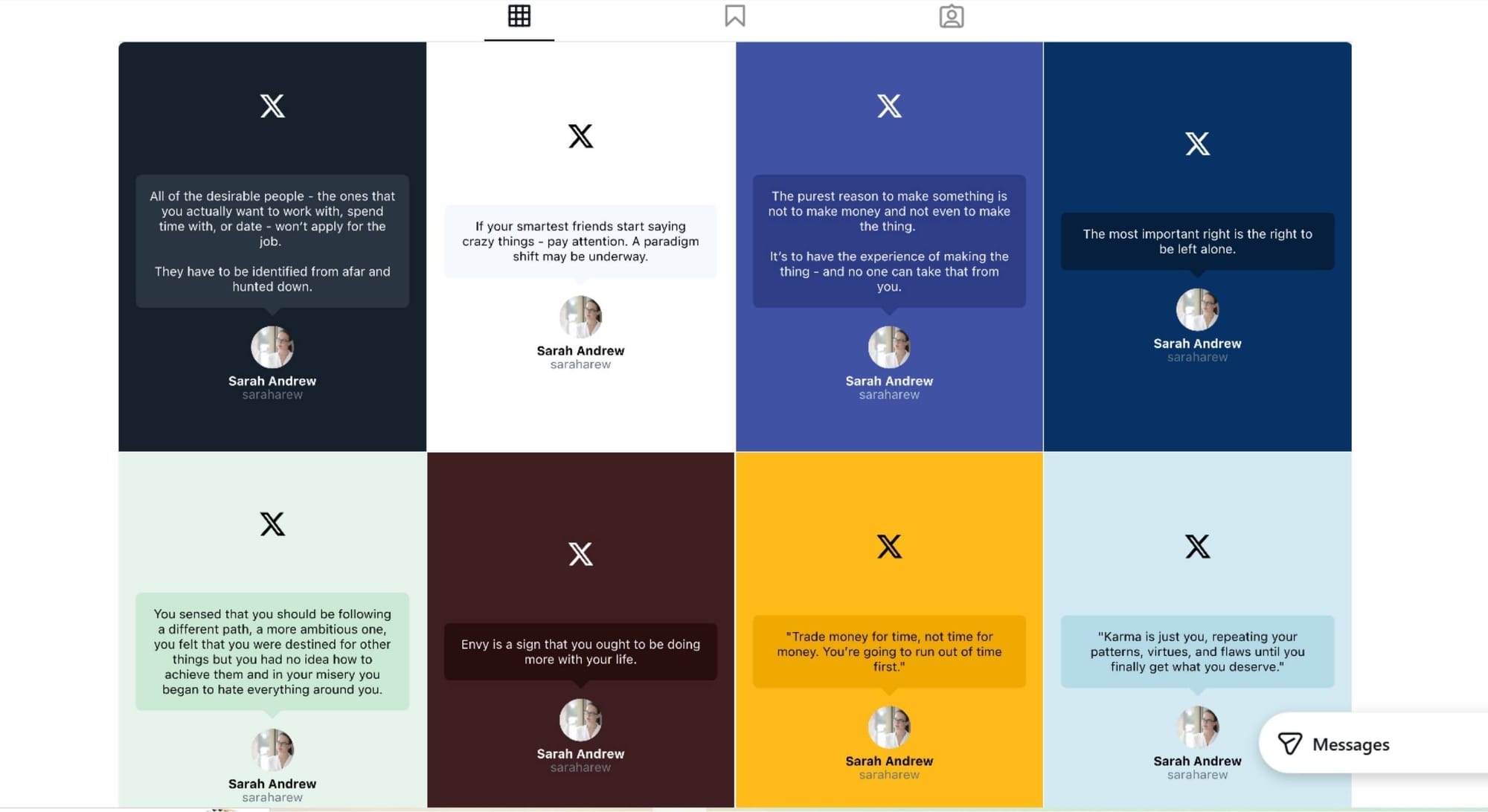
All scheduled from one place.
In one 3-week test campaign, we saw:
- 42% increase in aggregate engagement
- 31% growth in profile visits
- 19% increase in inbound leads
Not because we posted more.
Because we posted coherently.
Software for social media should enable coherence.
Automation Without Strategy Is Noise
One Reddit comment asked:
“Automate them how? Posting?”
That question reveals something important.
Automation is not the goal.
Alignment is.
Many tools sell:
- Auto replies
- Auto moderation
- Auto reposting
- Auto DMs
But automation without a clear brand voice amplifies confusion.
What I appreciated about Circleboom was its structured scheduling and cross-platform management without gimmicky automation overload.
It gives control.
And control gives clarity.
The Psychological Impact of Unified Systems
The biggest impact wasn’t metrics.
It was mental relief.
When all accounts live inside one software for social media:
- You stop tab-hopping.
- You stop exporting CSV files.
- You stop asking, “Did we post that already?”
You operate from a command center.
Founders don’t burn out from content creation.
They burn out from chaotic distribution.
Simplifying distribution is energy optimization.
Energy drives growth.
From Fragmentation to Momentum
With unified software for social media, momentum becomes visible.
You can:
- Track narrative performance across platforms
- Identify amplification channels
- Measure audience overlap
- Refine strategy based on synchronized data
Over one quarter, we tracked:
- 37% reduction in content production time
- 60% reduction in publishing errors
- Clearer targeting via audience overlap insights
- Stronger campaign consistency
Consistency compounds.
Fragmentation dissipates.
Enterprise-Level Stability Matters
Many tools break quietly.
Accounts disconnect.
APIs change.
Automations fail silently.
Circleboom’s Enterprise-level API integration reduces that volatility.
For hobby accounts, maybe that’s irrelevant.
For client contracts and revenue-based accounts, it’s essential.
Enterprise access builds operational trust.
Trust reduces risk.
What I Tell Clients Today
When clients ask about software for social media, I don’t give them a list.
I ask:
- Do you need unified multi-platform control?
- Do you plan to scale across channels?
- Do you require stable, official API integrations?
If the answer is yes, fragmented stacks are liabilities.
Circleboom Publish provides centralized orchestration without unnecessary complexity.
It’s not about having every feature.
It’s about structural integrity.
Final Reflection: It’s an Architecture Problem
That Reddit thread wasn’t really about tools.
It was about architecture.
Marketers are drowning in features.
Automation is marketed as salvation.
But growth doesn’t come from more tools.
It comes from clearer systems.
Software for social media should:
- Reduce friction
- Unify effort
- Support strategic cross-posting
- Enable systemized growth
When I consolidated into a unified dashboard through Circleboom, workflow improved.
But more importantly, decision quality improved.
And in marketing, decision quality determines trajectory.
If your strategy feels scattered, the issue may not be content.
It may be architecture.
Choose software for social media that thinks in systems.
Because when distribution is aligned, growth stops feeling random.
And starts feeling engineered.