
Follow Ratio Benchmarks:
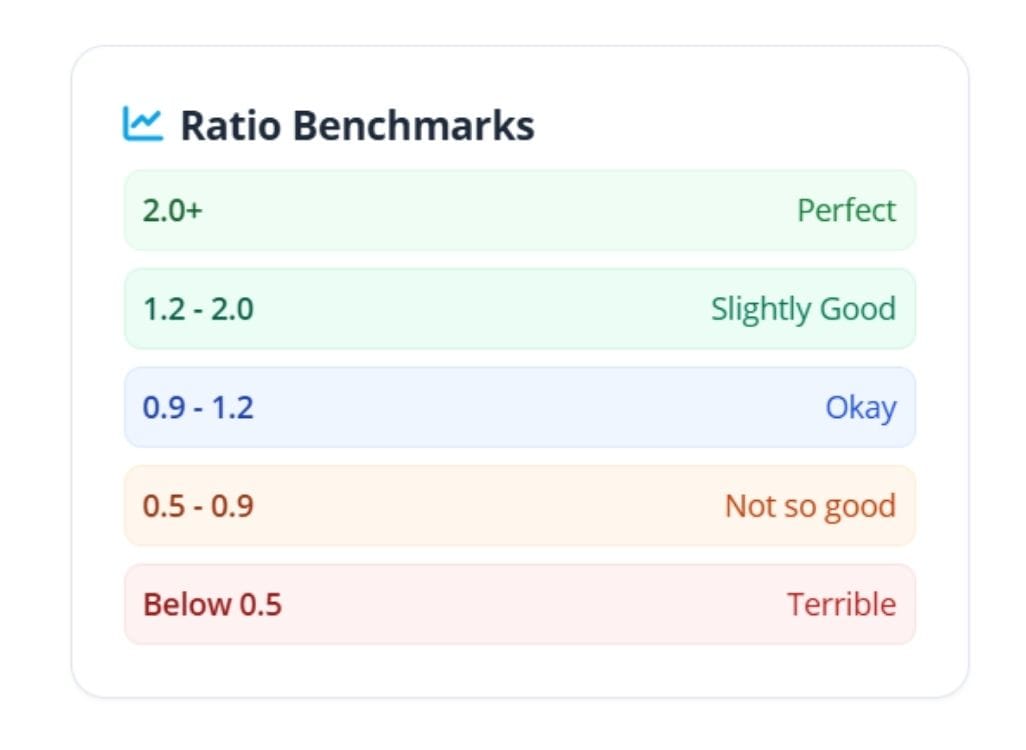
Check your Twitter (X) follow ratio here ⬇️:
 Altug Altug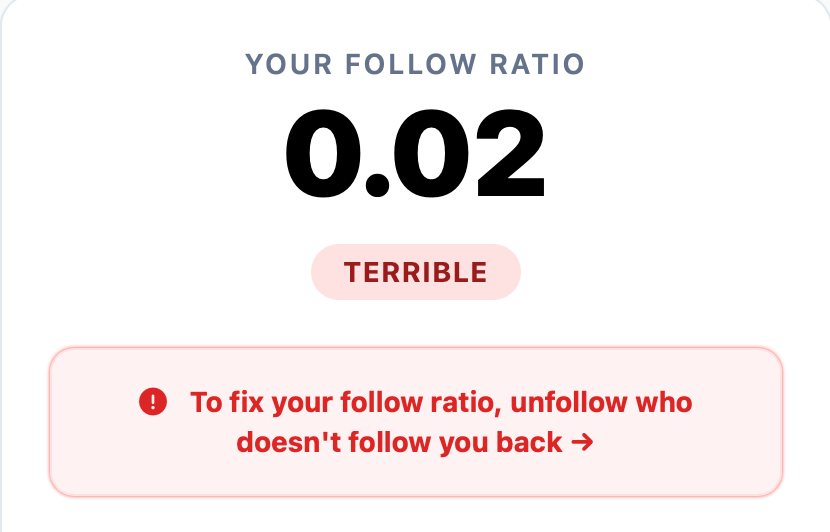
In the realm of social media, the follower to following ratio, commonly known as the “follow ratio”, or sometimes referred to by different names like "following ratio", "follower following ratio", or even "followers to following ratio", serves as a crucial metric indicating the popularity of an account. That's why some people go crazy about finding who unfollowed them on Twitter and even set up unfollower alerts.
 Altug Altug
Understanding the Follow Ratio
The follow ratio is a straightforward yet powerful metric. For instance, on Twitter, if an account boasts 10,000 followers and follows 1,000 accounts, the follow ratio is 10 (10:1). Conversely, with 1,000 followers and following 2,000 accounts, the follow ratio is 0.5 (1:2).
This calculation holds not only to find your Twitter follow ratio but also your follow ratio on other social media platforms. Many influencers care about this a lot. Also, businesses or agencies looking for influencers to collaborate via third-party applications also take this number seriously.
 infocircleboom.com
Importance of High Follower Ratio
A higher follower to following ratio basically means that the account has more followers than followings. It indicates greater influence or interest in an account's content, serving as concrete social proof. This can lead to collaboration opportunities and attract even more followers, especially for brands and influencers.
Let me put it this way: MIT Technology Review's official Twitter account, for example, has 1.2M followers, but it follows around 3,400 accounts. On the other hand, following a similar number of users, an account with the handle @_TNews has only 15k followers. So which one of them would you find more credible and be willing to follow for the latest updates in the field of technology?
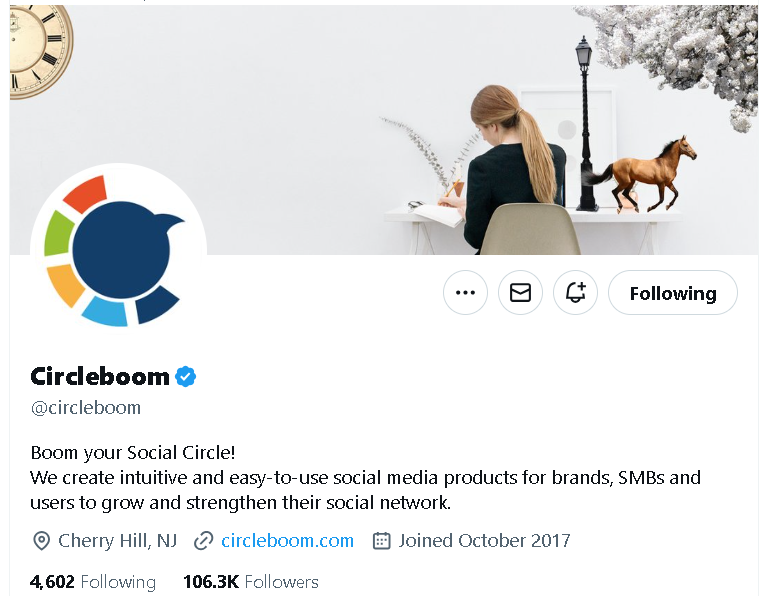
Twitter Follow Ratio
On Twitter, the average account follows about one account for every two followers. For personal accounts of daily use, especially to consume content, this ratio may go as low as 0.5 since not many influencers or business accounts would follow you back. But if you are an influencer, a content creator, or managing a business account, then you need to be way over 1.
 Kevin O. Frank
Twitter Follower To Following Ratio Benchmarks
The ideal Twitter follow ratio varies based on goals, niche, and audience. If you are an NFT influencer, for example, the ratio may be a bit lower due to many people following each other within NFT spaces. However, you will still have many followers, also making you influential.
Having said that, we can take the following as benchmarks:
- Low Ratio (less than 1:1): May indicate that the user is there to see what's up with his/her friends, other people, or maybe even on the news. But it may also be a red flag if the account is following too many spams or inactives.
- Normal Ratio (1:1 or 1:3): Indicates a balanced and reciprocal relationship where most likely, the user also creates content and attracts followers.
- Good Ratio (3:1 to 15:1): Establishes authority or influence in a field. Especially common among "nano" bloggers or micro-influencers.
- Excellent Ratio (15:1 or higher): Demonstrates a large and loyal fan base. The higher the ratio, the more influential the account (if the followers are organic and genuine, of course).
infocircleboom.com
Twitter Follow Ratio Limit
While there isn't a strict limit on the follow ratio, Twitter has strict constraints on the number of accounts you can follow or unfollow. Especially being transformed into X under Elon Musk, the platform takes spam/bot users as a serious issue and constantly fights it, despite popular belief.
In line with this policy, if you are following or unfollowing too many accounts in a short time frame, Twitter may label it as spam-like behavior. And this usually results in your account becoming shadowbanned, suspended, or permanently terminated by Twitter.
infocircleboom.com
How to Improve Your Twitter Follow Ratio? The Answer is Circleboom!
How to Fix a Bad Follow Ratio Using Circleboom
The two levers for improving your follow ratio on Twitter are growing your followers and reducing your following count. Circleboom helps with both, but the fastest fix is cleaning up who you follow.
Here is the step-by-step process using Circleboom.
Step 1: Go to Circleboom and login. If you don't have an account, create a new one in two seconds.
Circleboom is an official X Enterprise developer. So, don't worry about security issues.

Keep in mind that the API provides a more accurate real-time data stream than the X interface itself. While the platform UI may experience lag, the API captures and reflects new developments instantaneously.
Circleboom has the official Enterprise API, we don't scrape data from X!
Step 2: Run a following audit.
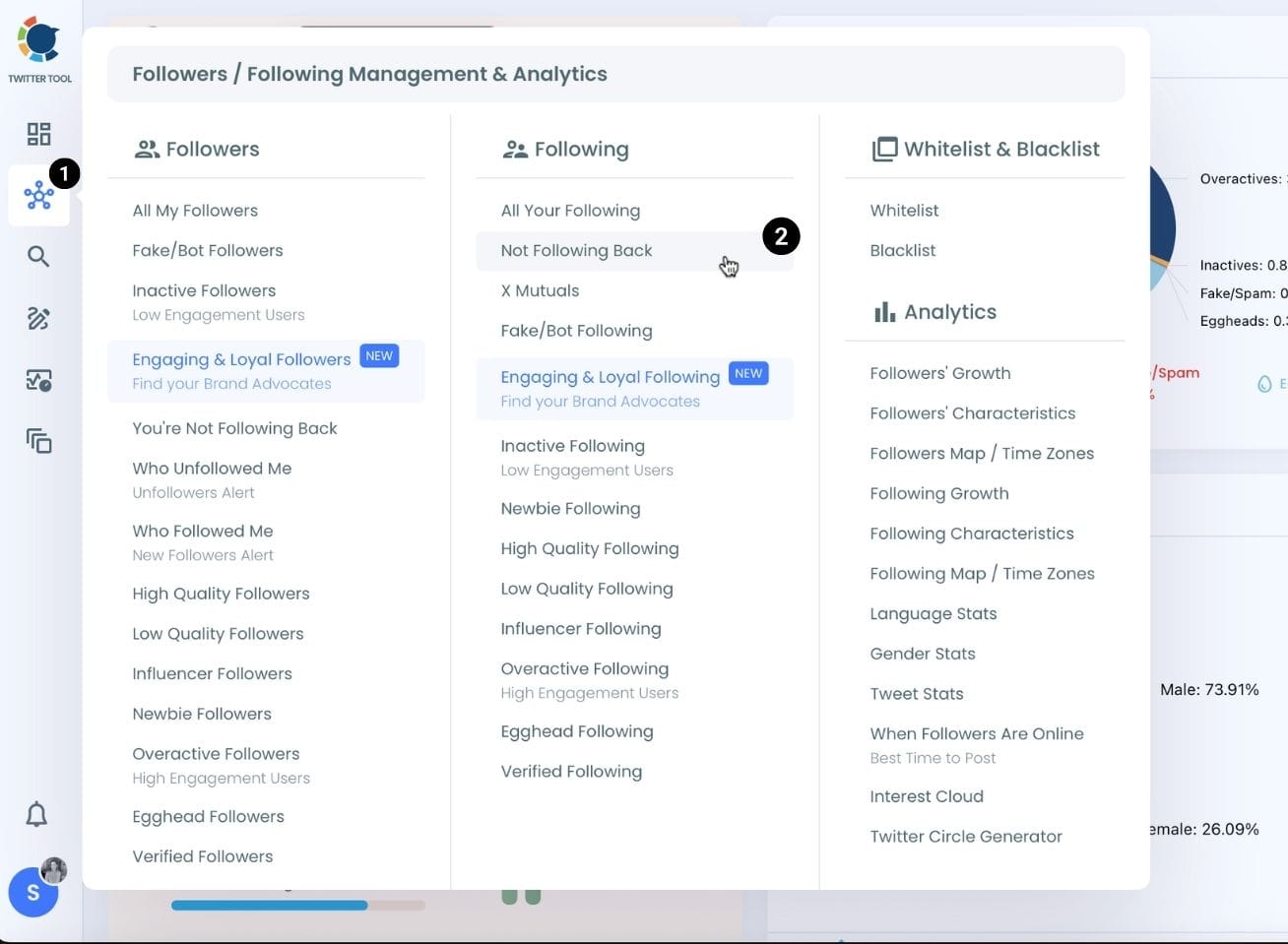
Navigate to the "Following" section in your Circleboom dashboard. You will see a segments by activity status. Click on "Not Following Back" to see those accounts that you follow but they don't follow you back. They are killing your follow ratio.
Step 3: You will see those accounts who are not following back.
Circleboom lists all these accounts. You don't need a manual work.
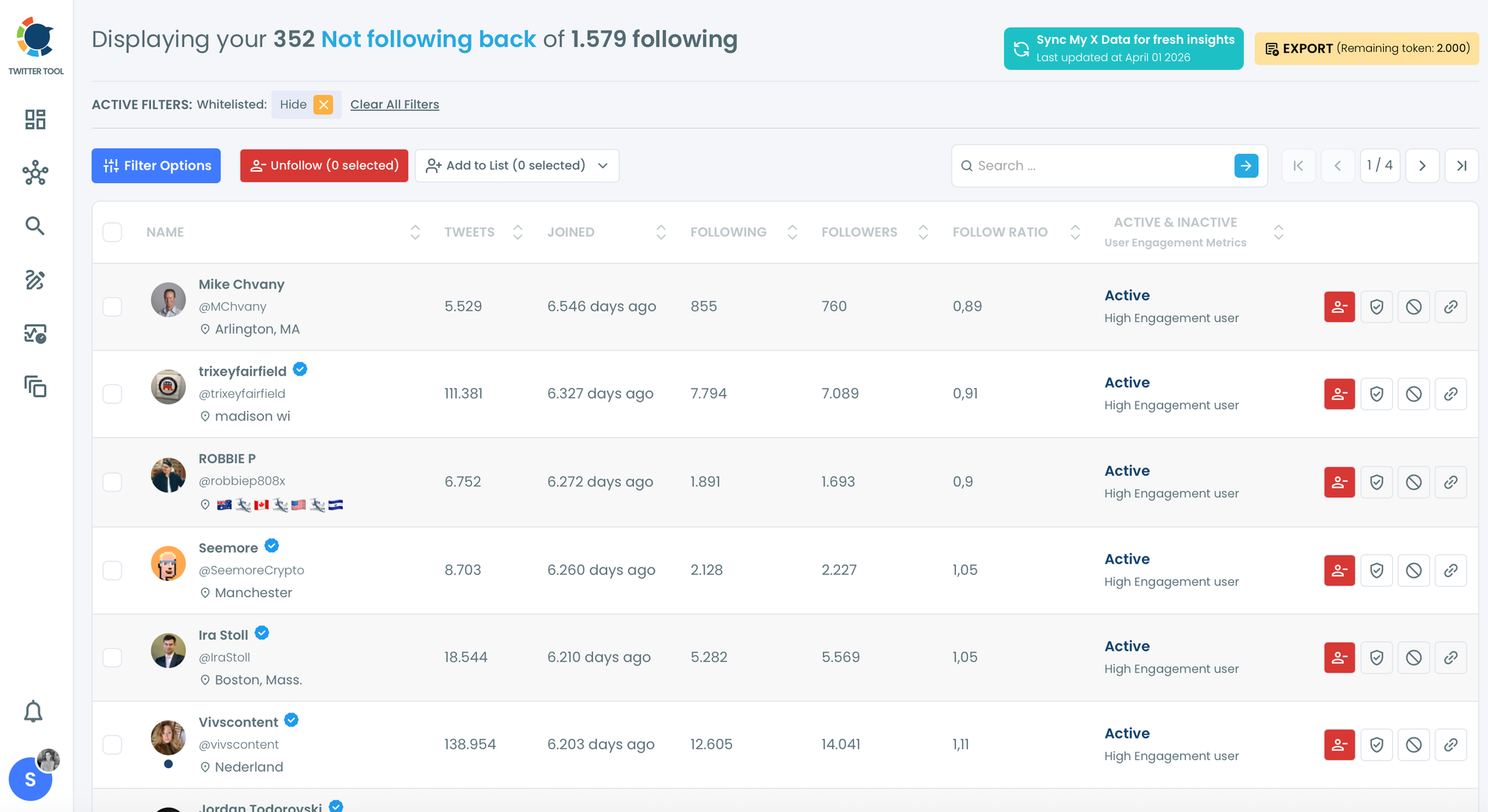
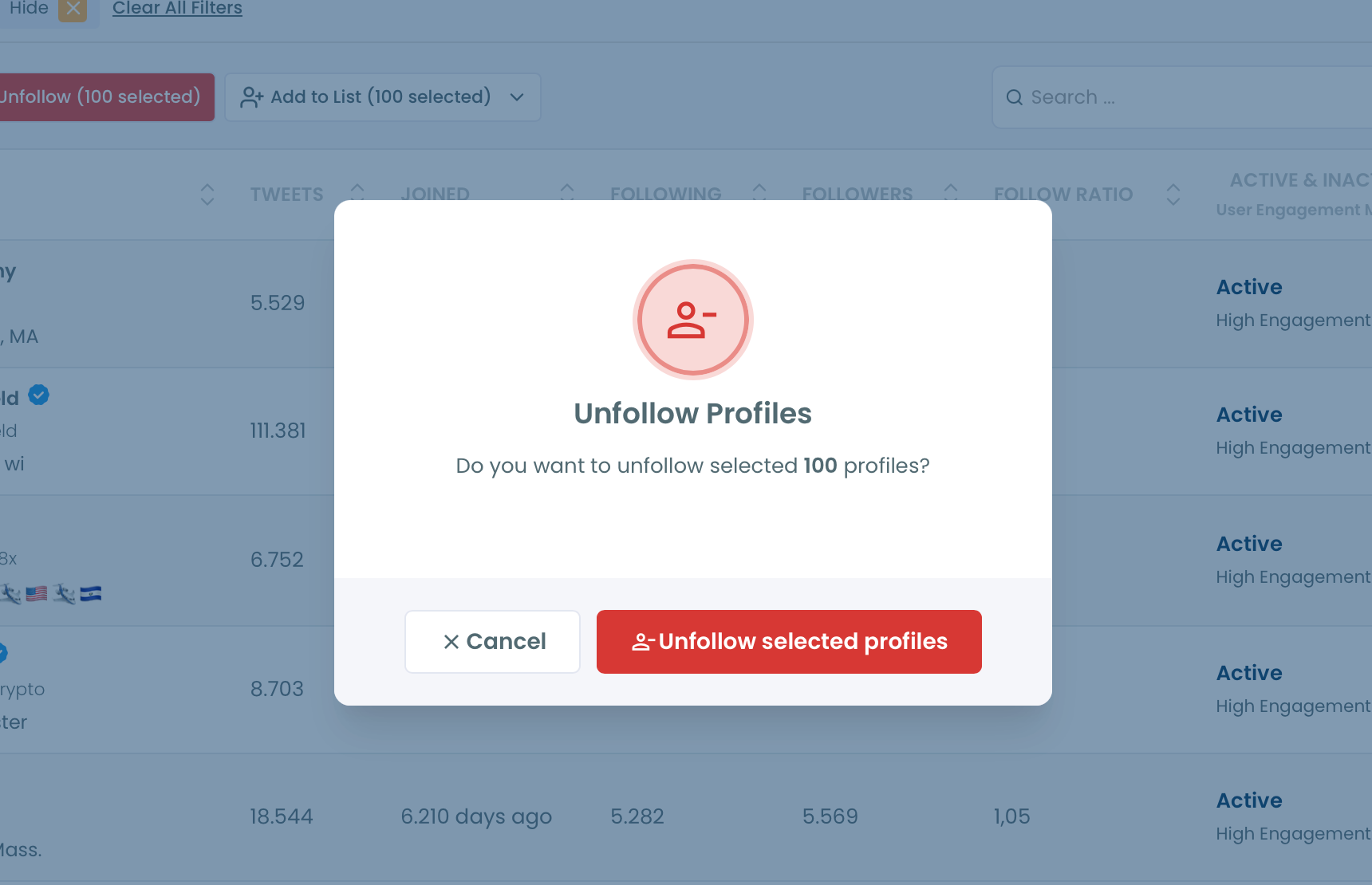
Step 4: You can mass unfollow them all. It brings a full cleaning.
Or, you can do it selectively. Follow my tactic: I will apply follow ratio filter. I want to see accounts with follow ratio between 0.9 and 1.1
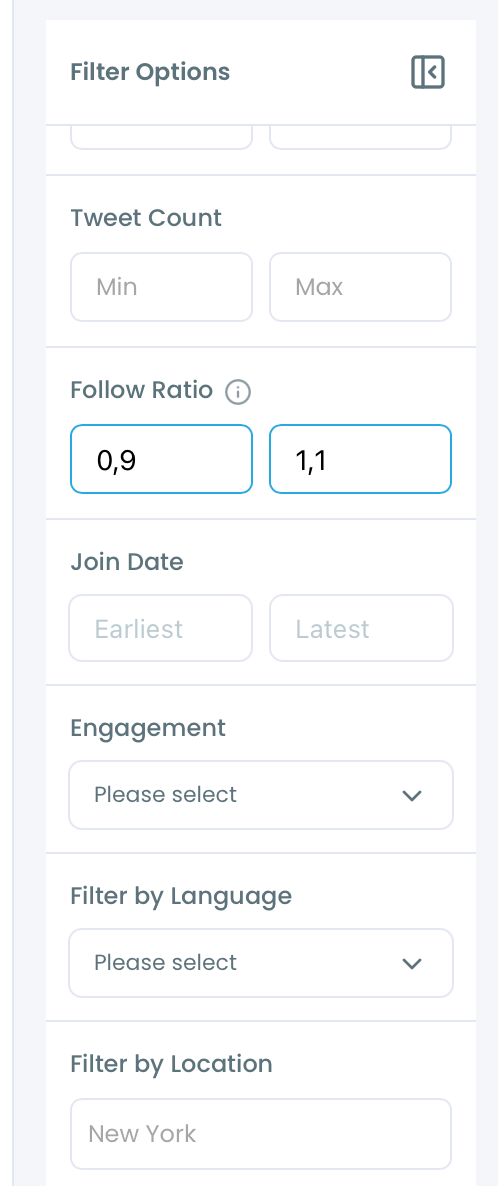
These accounts are normally following back those who follow them. However, they don't follow me back 😄 so I don't want them neither.
Circleboom found 211 accounts with this filter.
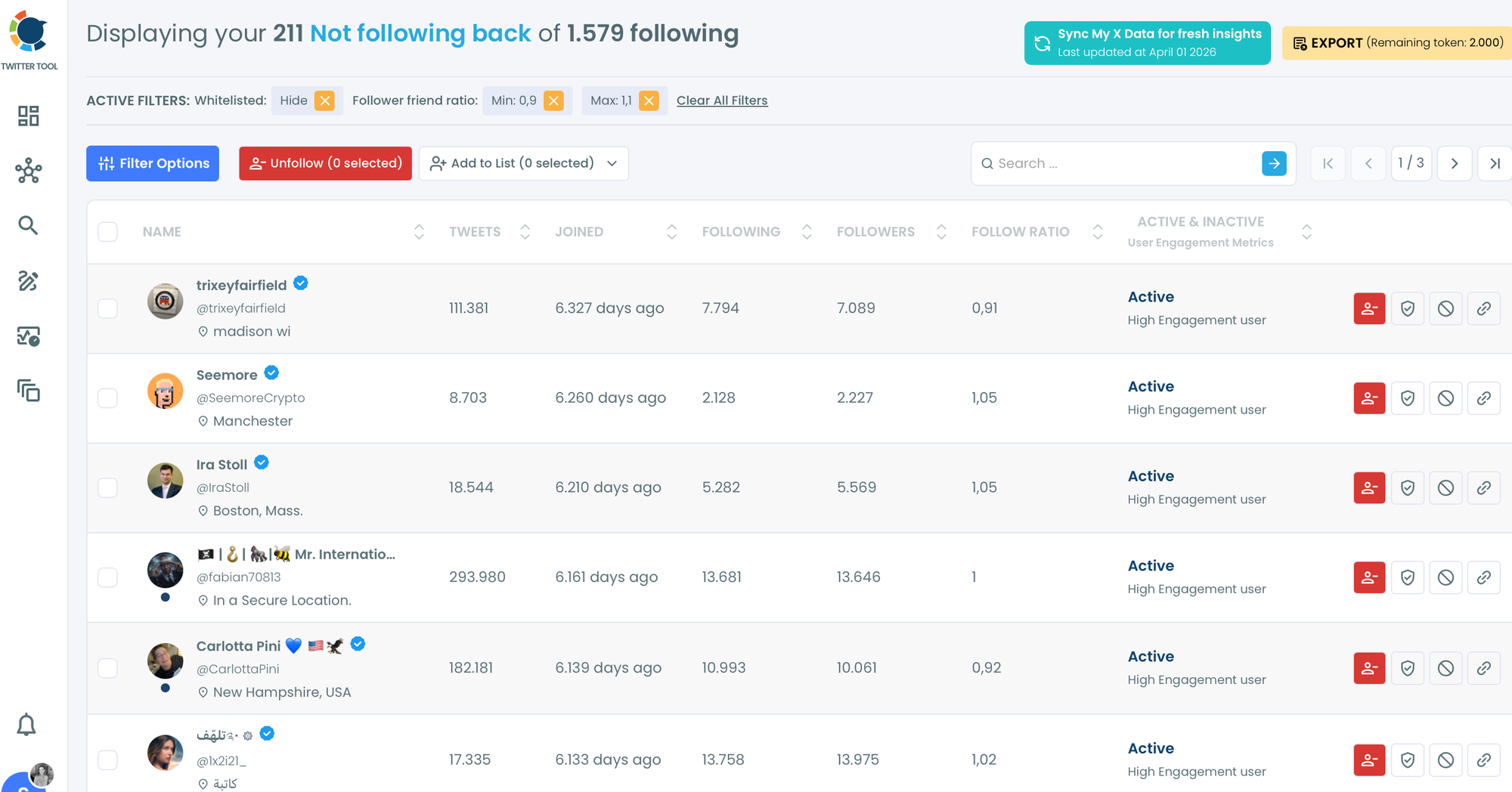
Step 5: Unfollow in bulk or selectively. You can remove accounts individually or in batches.
Circleboom lets you do this safely within Twitter's API rate limits so your account is never flagged or penalized.
The fastest and safest way to repair your follow ratio on Twitter is to use Circleboom to run this cleanup on a regular cadence.
What to Avoid When Improving Your Twitter Follow Ratio
While there are many ways to improve your follow ratio on Twitter, there are also some things that you should avoid doing, as they can harm your reputation and credibility, and may result in your account being suspended or banned by Twitter. Here are some things that you should not do:
- Spamming, buying, or exchanging followers: These are unethical and ineffective ways to increase your follower count, as they do not reflect genuine interest or engagement with your content. They can also expose you to bots, fake accounts, or malicious users that can compromise your security and privacy. Twitter has strict policies against these practices and can detect and penalize accounts that use them.
- Following too many or too few accounts: Following too many accounts can make your feed cluttered and unfocused, and can also lower your follow ratio. Following too few accounts can make you seem aloof and uninterested in other users, and can also limit your exposure and reach. You should follow a reasonable number of accounts that are relevant and beneficial to your niche, industry, or interests, and that can provide you with valuable insights, feedback, or opportunities.
- Unfollowing or blocking users without reason: Unfollowing or blocking users can negatively affect your follow ratio, as well as your reputation and relationships. You should only unfollow or block users if they are spamming, harassing, or offending you, or if they are no longer relevant or useful to your goals. You should not unfollow or block users just because they did not follow you back, or because you want to manipulate your follow ratio. Muting, on the other hand, is always an option if you want to see less of a specific account.
Bonus Content on Twitter Follower Ratio
Like to Follower Ratio on Twitter
The like to follower ratio is another important metric to consider. It measures the number of likes a post receives relative to the number of followers an account has.
It is a measure of how engaged and interested your audience is in your content. A higher ratio means that your posts are getting more likes relative to your follower count, which indicates that your content is appealing and valuable to your followers. A lower like to follower ratio means that your posts are getting fewer likes relative to your follower count, which may suggest that your content is not resonating well with your audience or that you have inactive or fake followers.
infocircleboom.com
Similar to follow ratio, there's no single "good" like-to-follower ratio for Twitter as it varies greatly depending on factors like account size, niche, and content type. However, I can instinctively call these numbers as benchmarks:
- 0 - 0.1%: A low like-to-follower ratio for most accounts. This is where, for example, an average account of 500 followers gets at most 2 likes per post on average. But if you have an account with 1M followers and get 1,000 likes per post, then it's something.
- 0.1% - 0.3%: This is a good to high ratio, indicating strong engagement. If we were to speak of an account with 10,000 followers getting around 10-30 likes, we can call it not bad.
- 0.3% - 1%: This is a high ratio, often achieved by influencers or accounts with highly viral content. If you have 100k followers and you receive 300-1,000 likes, then it's actually good.
- Over 1%: This is a very high ratio and usually means that people on Twitter love you. Imagine having that same account with 100k followers, and you get to have at least 1,000 likes per post... Just brilliant.
Twitter Follower Gender Ratio
Male users account for over 60% of Twitter users, but this may not be the case when it comes to your followers. And this purely demographic ratio might mean a lot to you, depending on what you're posting about. So can you see the gender analytics of your Twitter followers? You surely can with Circleboom.
infocircleboom.com
Conclusion
While the follower to following ratio offers valuable insights, it's crucial to view it as general guidelines. Manipulative tactics, such as follow-unfollow strategies, can impact the reliability of this metric. Remember, creating engaging content and building a community around your brand are the primary goals. And Circleboom is always here for you to reach these goals!