
Cross-posting the same content on Twitter and LinkedIn is effective when you adapt the post for each platform, and far less effective when you paste it identically to both.
Cross posting the same content on Twitter and LinkedIn works, but identical copy rarely performs well on both. The platforms reward native phrasing and have very different character limits. Circleboom publishes to X and LinkedIn from one compose action and lets you edit the text per platform, so you keep the efficiency without shipping a tweet to a LinkedIn audience unchanged. All of it runs through official API access.
→ cross posting the same content on Twitter and LinkedIn
Below: why identical copy underperforms, and how to cross-post while adapting per platform in one workflow.
The instinct to write once and post everywhere is sound. The mistake is assuming "post everywhere" means "post identically." Circleboom's cross-posting workflow removes the publishing friction while still letting the content fit each platform.
Why identical copy underperforms
Twitter and LinkedIn are different rooms with different norms. A 280-character tweet with X-native shorthand and hashtags reads as abrupt and slightly foreign on LinkedIn, where posts run longer, lean professional, and favor context over compression.
There is also a mechanical reason. X's For you timeline and LinkedIn's feed both lean toward content that feels native to the platform, so a post visibly copied from elsewhere tends to travel less far than one written for the room it lands in. Readers notice too, and a tweet pasted verbatim onto LinkedIn signals that you did not think the audience there was worth a tailored message.
None of this means cross-posting is a bad idea. It means blind duplication is. The efficient move is to create once and adapt lightly, which is exactly what a cross-poster with per-platform editing is built for.
How to cross-post to Twitter and LinkedIn the right way
To cross-post effectively, compose once, enable LinkedIn, then adjust the text for each platform before you schedule. The phases below run the full workflow.
Short demo: how to cross-post tweets to LinkedIn, Facebook, Bluesky, Threads, and Instagram from one place.
Connect and compose once
- Log in to Circleboom Twitter and connect your X account with official OAuth.
- Open the X Post Planner menu and connect your LinkedIn account alongside X.
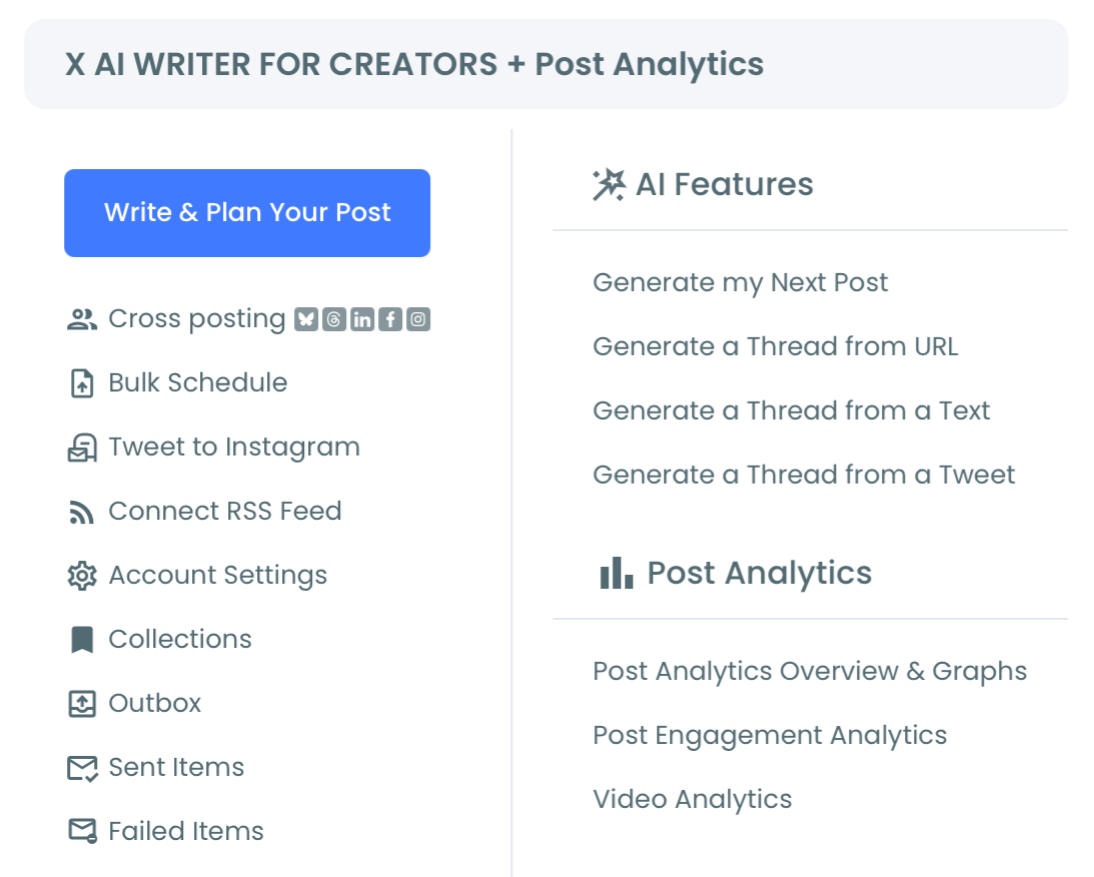
Adapt per platform, then schedule
- Write your post and open the Schedule modal, where the cross-post options sit at the bottom.
- Toggle LinkedIn on and select the connected LinkedIn account to publish to.
- Edit the text for LinkedIn in its per-platform field, expanding the tweet into the longer, context-first version LinkedIn rewards, then confirm.
That order works because adaptation happens before publishing, not after. The compose step gives you one source message, the toggle adds LinkedIn as a destination, and the per-platform editor turns the tweet into a LinkedIn-native post. Skip the editing step and you are back to blind duplication, which is the version that underperforms.
What changes between the two platforms
The adaptation is not cosmetic; it follows real platform differences. Circleboom flags character-limit issues per platform before you schedule, so a post that fits X but breaks LinkedIn norms is caught early.
The headline differences are worth keeping in mind:
- Length: X allows 280 characters on a standard account, while LinkedIn allows up to 3,000, so a tweet often reads as a fragment on LinkedIn.
- Tone: X rewards punchy and informal; LinkedIn rewards context and a professional frame.
- Format: hashtags and @mentions behave differently, and X-native references can confuse a LinkedIn reader.
Because Circleboom is an official X Enterprise developer, listed on X's customer directory, both the X publishing and the connected-platform delivery run through sanctioned access rather than a workaround. That keeps your accounts safe even as you push the same idea to several places at once.
When cross-posting genuinely pays off
Cross-posting earns its place for content that travels well across audiences, especially when timing matters.
- Announcements and launches, where every platform should carry the news at the same moment.
- Platform-neutral insights, where the idea stands on its own without X-specific shorthand.
- Consistent presence, where you want to stay active on LinkedIn using content originated on X.
The reach upside is real when you adapt: a single idea reaches your X followers and your LinkedIn network on the same day, with each version written for its room. If you also publish elsewhere, the same approach extends to repurposing content across platforms and to the broader question of whether it is possible to share your own posts outside X. For the LinkedIn side specifically, the steps to post a tweet on LinkedIn show how the adapted version should read, and if Instagram is in your mix, you can also link X to Instagram for visual content.
To manage the destinations, the Twitter-to-Instagram cross-poster handles visual platforms, and the LinkedIn post scheduler lets you plan the professional side on its own cadence when a post deserves a fully separate treatment.
The efficiency math that makes it worth it
The reason to cross-post at all is leverage: one idea, two audiences, a fraction more effort than posting to one. Blind duplication breaks that math by trading reach for speed, while writing two fully separate posts breaks it the other way, trading speed for hours you do not have.
Adaptation is the middle that keeps both. You spend the bulk of your effort once, creating the idea and the X version, then a small additional edit unlocks a second platform's audience natively. Across a month of posting, that compounding is large: every post you adapt reaches your LinkedIn network as well as your X followers, for the cost of a short rewrite rather than a whole new piece.
Common Questions About Cross Posting to Twitter and LinkedIn
Is it bad to post the exact same thing on both?
It is rarely the best option. Identical copy ignores each platform's length, tone, and norms, so it tends to underperform a version written for the room. Cross-posting with a quick per-platform edit keeps the efficiency without the penalty.
Will LinkedIn or X penalize cross-posted content?
Neither platform bans it, but both feeds favor content that reads as native, so visibly duplicated posts often travel less far. The fix is adaptation, not avoidance. A tailored version on each platform sidesteps the issue entirely.
Which platforms can I cross-post to from X?
Circleboom supports cross-posting from X to LinkedIn, Facebook, Instagram, Threads, and Bluesky. You choose which destinations to enable per post and edit the text for each, so you are never forced to send one version everywhere.
Should X and LinkedIn versions post at the same time?
For announcements, yes, since a coordinated launch benefits from both platforms carrying the news together. For evergreen insight, timing matters less, and you may even prefer to stagger them as separate posts so each lands in its platform's peak hours. The cross-post itself publishes both at once.
Do I have to adapt every single post?
No. Genuinely platform-neutral posts, like a clean announcement, can go out nearly identical. The adaptation matters most when a post leans on X-native shorthand or runs short enough to feel like a fragment on LinkedIn. Use judgment per post.
The Bottom Line
Cross posting the same content on Twitter and LinkedIn is effective when you adapt and weak when you duplicate. Create once, then tailor the tone and length for each platform before scheduling.
Circleboom gives you the efficiency of one workflow and the per-platform editing that keeps each version native, which is the combination that actually performs.