
To search Twitter by hashtag well, decide whether you need a conversation that is happening now or evidence from a completed moment. A broad hashtag without a time boundary can look busy while answering neither question.
Native search: a quick view of posts. Circleboom: a structured public-post search that lets you choose live collection from a start date or a historical date range, then review the posts and accounts through official Enterprise APIs.
→ search Twitter by hashtag
The useful answer to search Twitter by hashtag is therefore a method map: use real-time search for a live event, campaign, or breaking topic; use historical search to understand what a hashtag meant in an earlier period. Neither route promises every post or every account, because public posts can be deleted, protected, unavailable, or outside the retrieved result set.
What does it mean to search Twitter by hashtag?
Searching Twitter by hashtag means retrieving public posts that include a chosen hashtag, then using the results to understand a conversation or identify the accounts taking part. The hashtag is a starting signal, not a conclusion about intent, credibility, or current relevance.
X's own search surface is useful for a quick manual check. For a research task, a hashtag search needs more structure: a query, a defined time window, inclusion or exclusion rules, and a plan for what happens after you see the results.
That structure is the whole reason to track a hashtag on X from a tool rather than a search box. A search box answers “what is here right now.” A tracked query answers “what did I ask, over what window, under which rules,” which is the version you can defend to a client or repeat next quarter.
Circleboom offers two related routes. Real-time Tweet Search collects public matching posts from a selected start date onward. Historical Tweet Search retrieves public matching posts from a past date range. Both routes show a tweet view and a deduplicated profile view, so a researcher can inspect the content first and the accounts behind it second.
The most important choice comes before the query:
- Use a live search when timing is part of the signal.
- Use a historical search when the past context is the signal.
- Use both when you need to compare a current spike with an earlier conversation.
A hashtag becomes useful when its time window matches the decision you need to make.
Choose real-time search when the conversation is still moving
Real-time Tweet Search is designed for public posts from a specified date onward. It is the better fit for a conference hashtag, a launch tag, a current campaign, or a developing industry conversation where the reader still has a reason to respond while the context is fresh.
Circleboom retrieves matching public X posts through official Enterprise API access, then presents post-level metrics and the profiles extracted from those posts. The requested collection count controls how many posts the search attempts to collect. It does not guarantee an equal number of unique accounts.
That distinction prevents a common mistake. Five hundred posts might come from a small cluster of highly active accounts. The profile view deduplicates authors, which makes it easier to assess whether a hashtag reflects a broad group or a narrow burst of activity.
If your goal is an ongoing topic watch rather than one-off discovery, follow a hashtag on Twitter is a useful adjacent approach. A search, however, should still begin with a reason for collecting the posts.
Choose historical search when the date explains the meaning
Historical Tweet Search is the better route when the hashtag refers to a past campaign, previous event, older objection, or recurring topic. It uses a date range rather than a start date that collects forward.
This matters when you want to know who participated in last year's conference, how a product announcement was received in its first week, or which accounts discussed a topic before a policy change. Current posts cannot reconstruct that context reliably.
Historical results should not be treated as current audience sentiment. An account that used a hashtag months ago may have changed direction, gone private, become inactive, or simply moved on. The search reveals a past public statement. It does not guarantee a current relationship or availability.
The keyword and hashtag tracker can help frame the research question before you decide whether the live or historical window has more value.
Build a hashtag query that can survive review
A hashtag alone is often too broad. Add a clear rule that somebody else could reproduce. You might define the topic, language, date window, excluded words, and minimum engagement threshold before opening results.
Useful controls include:
- Keyword match type for an exact phrase, a contains match, or a partial match.
- Excluded terms that remove a known irrelevant use of the tag.
- Language, media, replies, links, and verified-account settings.
- Hashtag and cashtag inclusion choices.
- Engagement minimums and a time boundary.
Do not treat an engagement number as a quality verdict. Counts change, large conversations include spam and jokes, and a low-engagement post can still be the most relevant account for a narrow research question. Filters reduce noise. Human review supplies the judgment.
For a current topic that is gaining traction, trending hashtags on Twitter can provide context, but trend status alone is not a substitute for a defined search rule.
Search a live hashtag in Circleboom
The following workflow is appropriate when the hashtag's value depends on what people are posting now. It is a search-and-review process, not a guarantee that every public post will be collected or that every matching account should receive an action.
Set the live collection boundary
- Log in to Circleboom Twitter and connect the X account that will run the search.
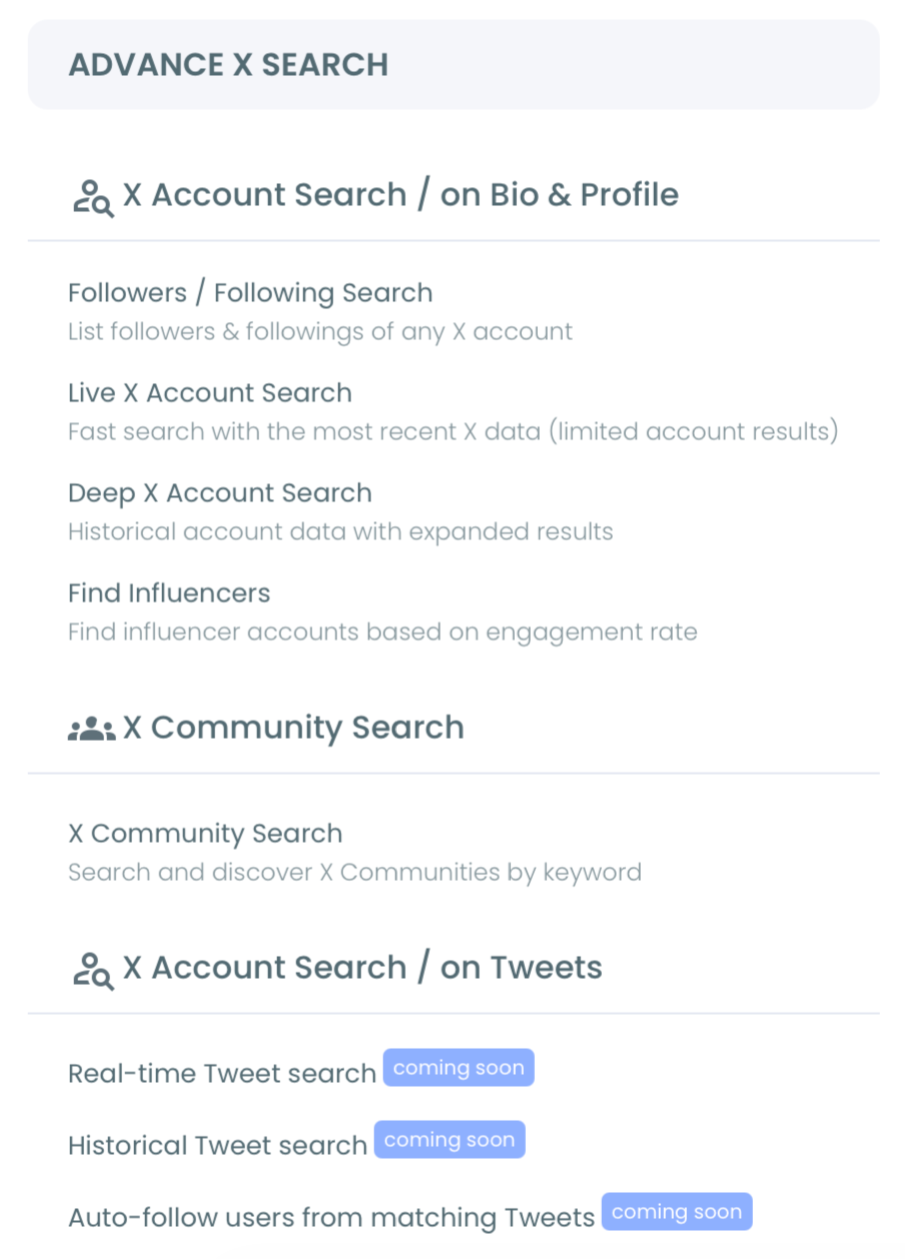
- Open Advanced X Search and select Real-time Tweet Search. The feature collects public matching posts from your chosen start date onward.
- Enter the hashtag and describe the public conversation you want to understand. Use a focused phrase around the tag when the hashtag has several meanings.
- Choose a recent start date and collection size. Last 24 hours, last 7 days, last 30 days, or a custom date can anchor the live window. Check your GetTweetToken balance before a large collection.
Refine before you act on the results
- Apply filters for language, exclusions, content type, and engagement. Keep the rule narrow enough that you can explain why a post belongs in the result.
- Review the tweet view before opening profiles. Read the matched text and check creation time, replies, likes, reposts, quotes, bookmarks, and impressions in context.
- Switch to Display Profiles of this search to inspect unique authors. A profile appearing in the view means it authored a matched public post. It does not prove the profile is a prospect, supporter, or safe account to follow.
- Save, list, or export only the accounts that pass your review. Consent and selection should happen after the query has been inspected, not because a broad hashtag returned a large number.
The workflow turns a live tag into a visible research trail: query, time boundary, filters, posts, profiles, then a deliberate next action.
Live-search demonstration: this walkthrough shows how a start date turns a keyword or hashtag into a current public-post collection.
https://www.youtube.com/watch?v=dZ4djvmOqTo
Why real-time results need a short shelf life
Public conversation changes quickly. A post visible when Circleboom collects it may later be deleted, made private, or altered by account changes. Engagement metrics are also snapshots at retrieval time, not permanent measurements.
That is why a live hashtag workflow should capture the findings you need, then review them promptly. Exporting a research set or adding high-fit accounts to a list preserves the result without pretending it remains an unchanged feed.
Circleboom's Real-time Tweet Tracker is built around that live-window model. Use it when timing adds meaning, not just because a current tab feels more convenient.
Circleboom is an official X Enterprise Developer company, which is what keeps this kind of bulk public-post retrieval inside X's own rules rather than outside them. The search still respects public-post access, token balances, platform conditions, and your own review before any action.
Compare the live result with the older record
The strongest hashtag research often has two passes. First, find the live conversation from a recent start date. Then run the same core terms through a historical date range to see whether the spike is new, seasonal, or part of a repeating complaint.
This comparison changes the question from “How many posts used the tag?” to “What has changed?”
It can reveal a new audience entering the discussion, a familiar group returning for another event, or a hashtag whose meaning has drifted over time.
The older Twitter hashtag search and trend search perspective is useful here, but the research conclusion should remain modest. Search data shows matched public posts within the selected parameters. It does not establish the full population behind a topic.
Separate hashtag volume from hashtag reach
Post count and reach answer two different questions, and a hashtag search only measures the first one directly. A tag can return four hundred matching posts and still have been seen by a narrow, overlapping audience, because the same followers saw most of those posts.
Counting is still worth doing, as long as you know what the number represents. A Twitter hashtag counter tells you how often a tag appeared inside your collected set under your filters. It does not tell you how many distinct people encountered it.
The gap between those two figures is where most hashtag reporting goes wrong. Impressions in the tweet view are per-post and retrieved at collection time, so summing them double-counts anyone who saw several posts from the same conversation.
A more honest read uses three numbers side by side:
- Matched posts, which measures how much was published under your rule.
- Unique authors from the profile view, which measures how many accounts took part.
- Median rather than total engagement, which resists distortion from one viral post.
That third number matters more than it sounds. One high-performing post inside a five-hundred-post collection can carry the average far above what a typical participant experienced, and an average built on it will overstate the conversation every time.
For the reach side of the question specifically, how many people saw my hashtag covers why the platform's own numbers behave the way they do. Read it before promising a client a reach figure derived from a search export.
A hashtag search measures participation precisely and reach only approximately. Report it that way.
Turn the hashtag into a repeatable research practice
To search Twitter by hashtag responsibly, write down the tag, the purpose, the dates, and the filters used. That small record lets you rerun the search after a campaign and compare like with like instead of relying on memory.
When the live window is the point, start a hashtag and keyword tracker search. Review the post set first, then decide whether a profile belongs in a list, export, or any later outreach workflow.
Questions about hashtag search on X
Does a hashtag search show every post on X?
No. Results depend on the public posts available through the selected query, date window, filters, and data access conditions. Protected, private, deleted, or unavailable posts may not be returned.
Should I use real-time or historical Tweet Search?
Use real-time search for a current conversation from a chosen start date onward. Use historical search when a past date range is central to the question. Compare both when you need change over time.
Can I act on every account found through a hashtag?
No. A matched post is a discovery signal, not permission to take broad actions. Inspect the post and profile, then select only accounts that fit a defined, consented workflow.
Why did my result contain fewer profiles than posts?
Profile view deduplicates authors. Multiple matching posts by one account can produce many tweet results but one profile row.