
A pitch built on a follower count gets tested the moment it lands, and it usually fails that test in silence: no reply and no reason given. Every month spent growing the number instead of proving the audience is a month in which a smaller, better documented account takes the budget. Getting brand deals on Twitter starts with evidence a brand can check for itself.
How do you get brand deals on Twitter?
Prove your audience before you pitch. Circleboom builds a dated analysis report of your own X account, covering follower quality, demographics and engagement against impressions, with official X Enterprise API access. Clean up what looks weak, take a second report, and send it to brands that fit.
→ Twitter brand deals
Why most Twitter sponsorship pitches get no reply
Most sponsorship pitches get no reply because they ask a brand to trust numbers it cannot verify. The standard advice is to put your metrics in a media kit. It rarely says where trustworthy metrics come from or how the brand will test them.
Weak creator kits share a pattern. They lead with a follower total, add a self-reported engagement figure with no period attached, and describe the audience in one adjective.
The doubts a brand has when it reads your kit
A brand manager reading that page has three open doubts:
- How many of those followers are real and active.
- Whether they live where the brand sells.
- How old the figures are and who produced them.
Size is the doubt creators worry about most, and it matters least. Brands do work with macro influencers, but a large count that cannot be examined is a weaker offer than a modest one that can.
Some creators answer the credibility doubt with a single score. A reputation score such as the one from Tweepcred Calculator is a quick read on standing, but a brand still wants the audience breakdown behind it.
I think of it as a sales problem with a missing spec sheet. No buyer signs for a product whose contents are a guess, and an audience is the product in every sponsorship.
So the first task is not outreach. Before you try to get brand deals on Twitter, read your own account the way the brand will, and close the doubts before anyone has to raise them.
What counts as proof when you pitch a brand on X
Proof is a dated report from a documented source that shows what your audience is made of. With Circleboom's X Account Analysis tool, you can produce that report for your own connected X account in one run.
The report has nine sections. For Twitter brand deals, a partner mainly needs four things from it:
- Audience composition: human, suspected fake, active and inactive shares.
- Geography and language of the followers.
- Engagement rate, calculated as total engagement divided by total impressions.
- The date the analysis was taken.
The source is part of the proof. Circleboom is listed on X's Enterprise customer directory, which means the records behind every chart are retrieved from X through sanctioned access. A brand's analyst can accept that in a way they cannot accept a cropped screenshot.
What native X analytics leave out of a pitch
X's built-in analytics stop at post-level figures, and a kit assembled from them by hand stops there too. The X Account Analysis report adds the parts a brand asks about next:
- Fake and inactive follower shares, with the accounts behind them.
- Quality tiers for the follower base.
- Audience countries and languages.
- A saved, dated record you can return to.
Two boundaries keep this section honest. What to charge, and which engagement rate to quote in a rate card, is a separate pricing exercise.
Once a deal is agreed, disclosure rules apply. X's policy on paid partnerships covers how a paid post is labeled. The FTC's Disclosures 101 for social media influencers explains that a material connection with a brand has to be made obvious.
The pitch-readiness loop for Twitter brand deals
The pitch-readiness loop is a five-stage sequence that turns an unexamined account into one a brand can evaluate. Most creators run only the last stage, which is why their pitches stall.
The five stages, in order:
- Report: take a baseline analysis of your account as it stands.
- Cleanup: review the flagged followers and remove the ones you confirm.
- New report: take a second analysis after the cleanup.
- Presentation: turn the second report into a branded export.
- Pitch list: send it to brands and contacts that match your audience.
The second dated report is the proof.
One report is a snapshot. Two reports, set side by side, show a direction: this is what the audience looked like, this is what was done, and this is what it looks like now. A brand can check each of those claims against the dates.
That is also the marketing point most advice misses. A creator who documents a cleanup is showing a brand how they will treat the brand's money: measured before, measured after, nothing taken on faith.
How to read the two reports without overclaiming
Read the two reports for what a cleanup can change, which is composition. The audience quality shares and the High quality tier should move once flagged accounts are gone. A growing High tier across two analyses is the clearest sign the cleanup changed who follows you.
Engagement rate is a different matter. The report calculates it against impressions, not followers, so removing followers does not change its denominator. Present the composition change as the result of the cleanup, and present the engagement figures separately with their own window.
That restraint helps your case for brand deals on Twitter. A brand that catches one inflated claim stops trusting the other nine.
Should you remove fake and inactive followers before pitching on X?
Yes, review and remove the followers you confirm as fake or dead before you pitch, because a brand that audits your account will find them anyway. Do the cleanup between two reports so the effect is on record.
The order matters more than the volume. Circleboom's guidance for this feature is to run cleanup first and then take a new analysis, since audience composition only moves in the report after the flagged accounts are gone.
What to check before you remove anyone
A flag is a prompt to review an account, never a verdict on it. Three cautions from Circleboom's guidance on the report apply here:
- Suspected fake or bot status is an analytical signal, not a confirmed identity.
- The inactive label measures how often a follower posts, not whether they read you.
- A default avatar is one profile trait and does not prove an account is fake.
A follower who never posts can still be a customer, or the exact marketing contact you plan to pitch. Add those accounts to Whitelist before any removal. The fuller method is in the post on how to get rid of ghost followers on Twitter (X).
How removal runs in practice
Removal is gradual and confirmed by you at each stage. Selecting followers and pressing Remove Follower only stages them in a queue. The Circleboom Chrome extension then processes that queue one account at a time, and nothing is removed until you press Start there.
Keep Chrome open while the queue runs, and expect automatic pauses when X's limits are reached. The pauses are there to keep the account within X's rules.
One limit to plan around: removal is permanent on Circleboom's side. A removed account can follow you again by its own choice, but you cannot restore it. Export the segment first if you want a record, then remove Twitter (X) followers you have reviewed.
How to get brand deals on Twitter step by step
The steps below run the loop from baseline to finished proof.
Take the baseline report
- Open Circleboom Twitter and connect the X account you will pitch with. The report runs on the connected account, so no handle is typed.
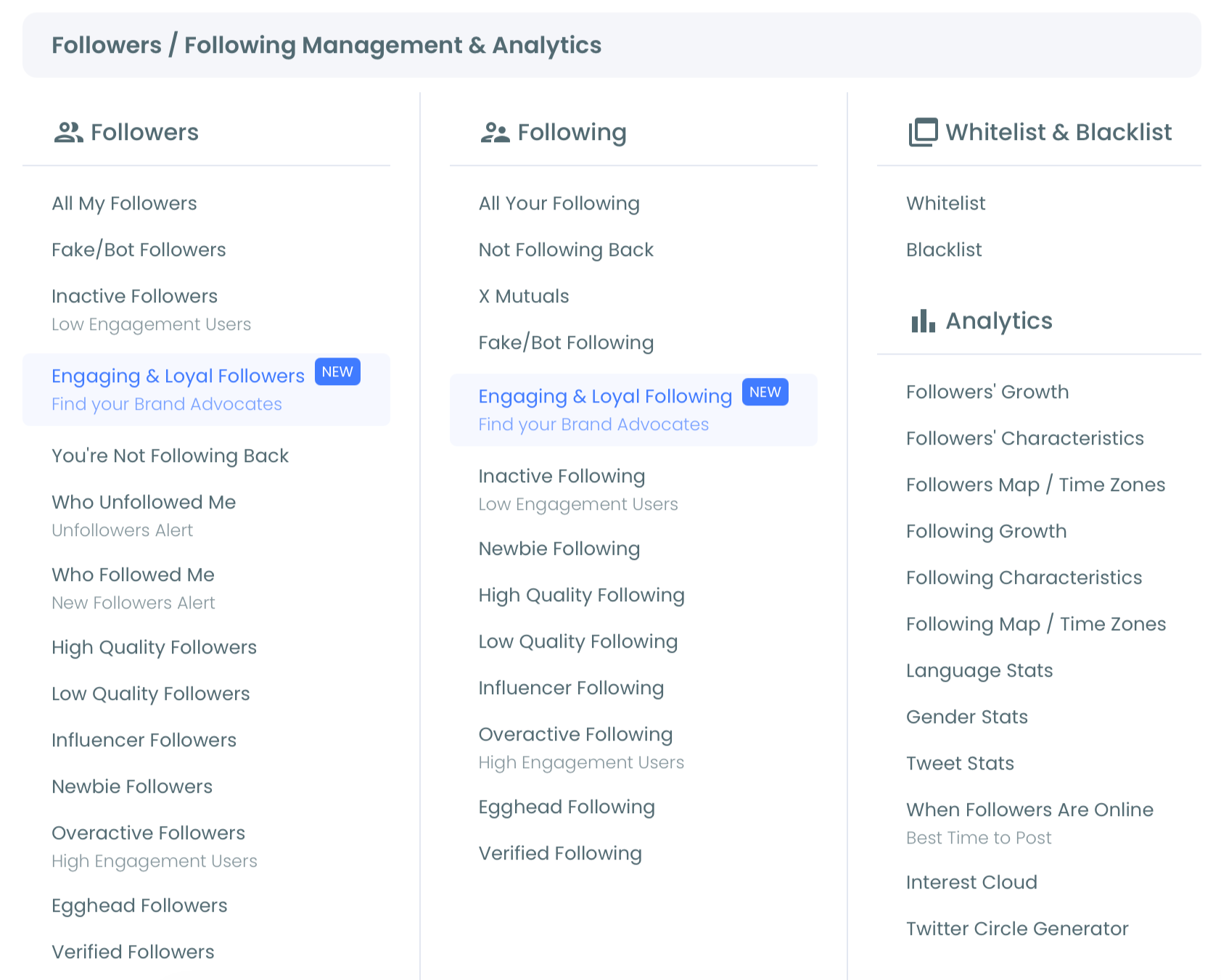
- Go to the Followers / Following Management & Analytics menu and choose X Account Analysis, the first item under Analytics.
- Select Start Account Analyses and pick Keep it up to date every month. That plan takes today's analysis plus 12 automatic monthly ones, 13 in total, on a day of the month you choose.
Find what a brand would question
- Read Audience Quality first. Note the human and fake shares, the active and inactive shares and the quality tiers, then open the drill-down lists to see the accounts behind each figure.
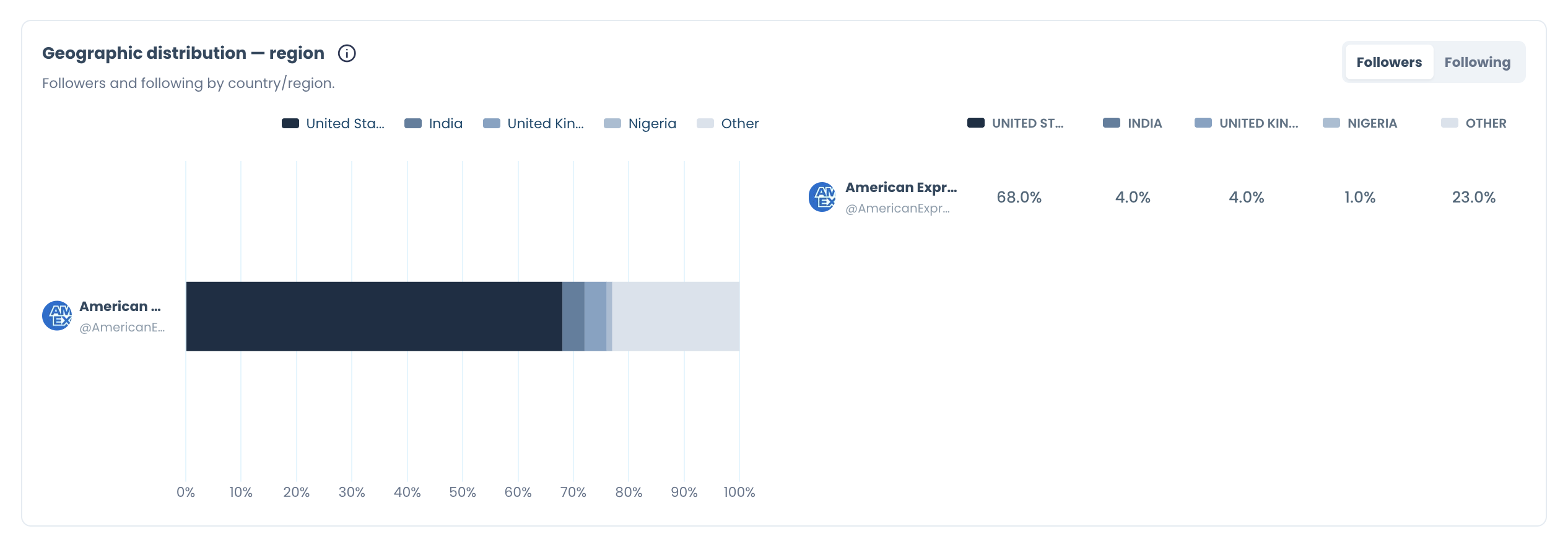
- Check Geographic distribution on the Followers view. The panel shows your four largest follower countries plus an Other bucket, which tells you which brands' markets you can credibly claim.
- Review the flagged followers and remove the ones you confirm. Whitelist useful contacts, select the accounts you have confirmed, and let the Chrome extension work through the queue once you press Start.
Produce the second report and package it
- Select Get a new report with the latest X data. This is the control for a new analysis. The baseline stays in your history unchanged.
- Turn on Compare Reports and add the baseline next to the new analysis. Check that the audience quality shares and the High tier moved.
- Select Create Your Presentation to build the branded export you will attach to the pitch.
Each stage feeds the next. The baseline shows the gap, the cleanup addresses it, and the second dated report shows what moved, which is the one page a brand can check without taking your word for anything.
How to send your X stats to a brand as a report
Send your stats as the branded export from Create Your Presentation, with the analysis date visible. It builds a logo-carrying version of the current report, so a brand receives a document and not a folder of screenshots.
A brand that is weighing Twitter brand deals with several creators will compare those documents line by line, so make yours easy to compare.
A useful pitch page connects three things:
- One finding, such as the active share of your followers.
- The panel that supports it.
- What it means for the brand's campaign.
A look at the export itself: how user analytics leave Circleboom as a file you can attach to a pitch.
Add the timing panel when the brief includes posting slots
Include the audience active-times heatmap when the brand wants to agree on publishing times. It maps when your followers post, hour by hour and day by day, and those activity peaks are the likely windows for a sponsored post.
State the limit beside it. Activity shows when followers are around, and it does not guarantee that a given post will be seen. A brand's planner will respect a window that comes with its caveat more than a promise that comes without one.
What to do when the brand asks again next month
You do not rebuild anything when a brand asks for fresh numbers. On the monthly plan, a new analysis is taken automatically each month for 12 months, and each one is dated and stored next to the earlier ones.
Old analyses are never overwritten, so last quarter's report remains a correct record of that day. Compare Reports places up to five analyses on one screen, which is the month-over-month view a returning sponsor tends to ask for.
There is one cost to waiting. Each analysis is a snapshot of its pull date, and a skipped month stays missing from the history. Start the series before the first pitch, not after the first request.
How to find brands and brand contacts on Twitter
Find brand contacts by searching account bios for the role and the company, then narrowing to accounts that already know you. Three routes fit this job, and the first two are Circleboom searches:
- Run Live X Account Search with bio keywords when you want people who are active on a topic now.
- Run Deep X Account Search when you need a larger prospecting list built from historical bio and tweet data.
- Filter your own followers to verified accounts and check which of them work at brands you would pitch.
For the first two, the round-up of tools to search Twitter bios and profiles shows the options side by side.
The third route is the warmest. A marketing lead who already follows you has seen your posts. Circleboom's verified Twitter accounts list is the quickest way to see who is in that group.
Write a first message a contact can forward
Keep the first message short. Name the audience overlap in one line, attach the presentation, and propose one concrete post format. A contact who can forward your email to a budget holder without rewriting it is far more likely to do so.
Match the list against your report before you write to anyone. If most of your followers are in two countries, pitch brands that sell in those two. A brand deal on Twitter is easier to win when the geography panel has already answered the brand's first objection.
While that list builds, affiliate links and subscriber income are the usual ways to earn without a sponsor's sign-off.
What it costs to pitch without proof
Without a dated report, your pitch is a claim, and a brand prices a claim at zero. With one, the same account becomes something a marketing team can evaluate and approve.
The mistake I see most often is waiting. Creators hold off until the follower count feels impressive, and in that time they build no history at all. An audience record cannot be reconstructed for a month nobody measured.
The stakes are simple to state. Every month without a baseline is a month of evidence you will never get back, and the next brand that asks for your numbers will ask for their date too.
Twitter brand deals go to the accounts that can be checked. Run the loop once before your next outreach: report, cleanup, new report, presentation, pitch list.
→ Build your proof for Twitter brand deals
Brand deal FAQ: followers, proof and timing
How many followers do you need before brands will sponsor you on X?
There is no fixed number, and X does not publish a follower minimum for brand partnerships. A small account whose followers are mostly real and active can be pitched as soon as a dated report shows that. The post on where to find micro influencers covers how brands look for accounts of that size.
How can I tell whether my audience is the one a brand wants to reach?
Read geography and language first, then Audience bio keywords, and compare all three with the brand's customers. Bio keywords are self-descriptions and not confirmed interests, so treat a match as a strong hint that still needs the engagement figures beside it.