
How do you find tweets from a specific date on Twitter when the search keeps coming back empty?
I used to answer that with two fields and a shrug. Set the start date, set the end date, read whatever lands. That answer failed often enough that I stopped trusting it, because a date window on X is not the plain-English range it looks like.
It filters on a stored timestamp, not on the calendar day you remember. That one gap is what hides the exact post you came for.
How do I find tweets from a specific date on Twitter?
Bracket the day instead of naming it. Start the window one day before your target and end it one day after, then read the timestamp printed on each result row. Circleboom searches historical X posts by content and date range through the X Enterprise API, and shows the accounts behind every matching tweet.
→ find tweets from a specific date on Twitter
How I find tweets from a specific date on Twitter, step by step
See the window in motion: where the date range sits inside the Historical Tweet Search flow, and what the results table prints once the search runs.
https://www.youtube.com/watch?v=ZRslhxkc43Y
The workflow I settled on, in order.
Open the search that reaches past the recent window
- Log in to Circleboom Twitter and connect your X account.

- Open the Advanced X Search menu, then pick Historical Tweet Search from the list.
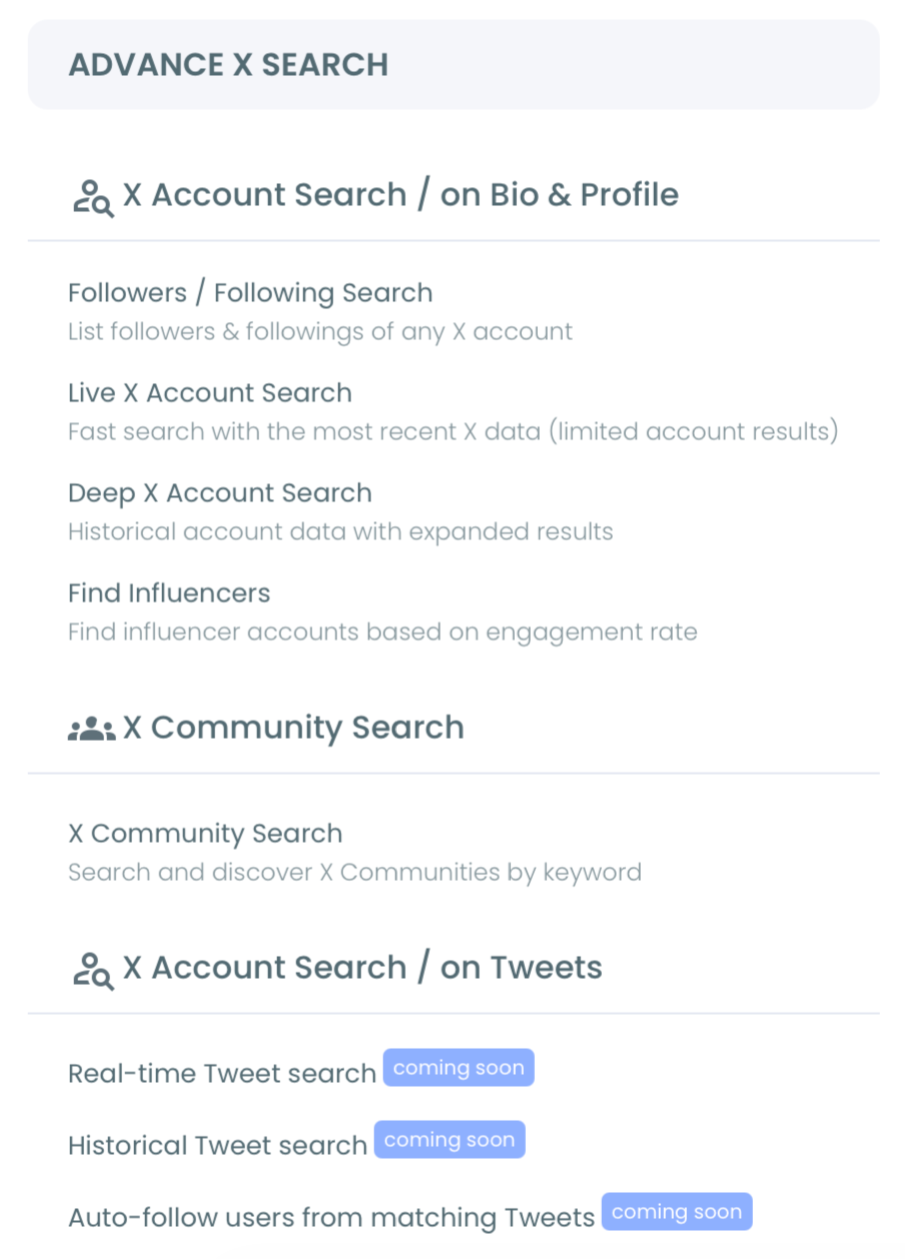
Bracket the day instead of naming it
- Describe the tweet in your own words, then accept or edit one of the AI search variations the interface suggests.
- Set a custom date range one day wider on each side than the day you actually want.
- Add one narrowing control before you run it, such as an exclude term, a language, or a minimum like count.
Read the timestamp on the row, not the one in your memory
- Check the Created At column on each matching tweet, which records the day, the hour, and how long ago it posted.
- Switch to the profile view with the Display Profiles of this search button when you want the accounts behind those tweets rather than the tweets alone.
That order survives contact with a real search because each step absorbs a different failure. The wide bracket soaks up the clock drift on both ends of the window. The filter keeps the collection small enough that you are not paying tokens for noise. The Created At column settles the argument about which day the post actually landed on.
Circleboom collects the matching X posts inside the window you set and files them under a search log you can reopen.
At a glance: log in, open Advanced X Search, describe the tweet, widen by a day on each side, add one control, read Created At.
Why the last day disappears from a Twitter date search
X documents the end of a date range as inclusive. Its until: boundary matches posts made on or before the date you type, and X's advanced search presents both ends as a friendly pair of From and To calendars.
So people set a tight window and trust it. That is exactly where the day goes missing.
An inclusive end boundary promises that your date gets counted. It does not promise that your day and X's day begin at the same moment, and a boundary written as a calendar date is filtering rows that carry a full timestamp.
Which is why the padding rule earns its place. Push the end of the window forward by a day and the question of where the boundary falls stops mattering.
Check what a padded window returns when you search tweets from a specific date on X instead of typing the single day you remember.
The same discipline shows up across every filter in Twitter advanced search, where a control that reads as plain English usually has a rule sitting underneath it.
What a date window on X actually measures
X records every post with a UTC timestamp, not a local one. Its data dictionary prints creation times in ISO 8601 with a trailing Z, and that Z is the whole story: it marks a moment on Greenwich time, not on yours.
A post you published at 9pm on the 14th in New York carries a UTC timestamp on the 15th. A post published at 7am on the 14th in Sydney carries a UTC timestamp on the 13th. The date you remember and the date the platform stored are different numbers for the same event.
The gap is largest for people who post at the edges of their own day. Late-night replies and early-morning threads land on the neighbouring date in the index almost every time.
A one-day pad on each side of the window is not caution, it is arithmetic.
This is also the quiet reason a search that "should have worked" returns nothing at all. The keyword was right, the account was right, and the day was right in local terms.
The window still missed by a few hours.
Search behavior like that runs through the 4 mistakes to avoid while performing Twitter search list. The boundary error is the one that costs the most time.
Is the post missing, or is your date window wrong?
Sometimes the post is genuinely gone, and no window will bring it back.
Pew Research Center's study of tweet survival, when online content disappears, put a curve on how fast that happens:
- About 1% of tweets are gone within an hour.
- 3% within a day.
- 10% within a week.
- 15% within a month.
In roughly 40% of those losses the account was still standing and only the post had been removed.
Circleboom returns publicly available tweets only. Private, protected, and deleted posts cannot be retrieved at any date range, which means an empty result is two different messages wearing the same clothes.
Read against a date search, that curve is a stop rule. A post from last month that refuses to appear at any window width is far more likely deleted than mis-dated, because the removals cluster early.
So test the window before you conclude anything. Widen to a month around your target and search the same keyword again. If the account's neighbouring posts appear and yours does not, the date was never the problem.
That distinction matters when you are reconstructing an old thread rather than hunting a single line, which is the job search Twitter history is built around.
The filters that make a wide window usable
Widening the window is safe only because the other controls take the volume back down.
The Historical Tweet Search panel carries a set of narrowing options that pair naturally with a padded date range:
- Keyword match type, set to exact phrase when you remember the wording.
- Exclude terms, which cut the retweet and quote noise around a popular post.
- Language, which removes an entire hemisphere of unrelated matches in one click.
- Media type, set to images or videos when you remember the attachment better than the text.
- Engagement minimums on likes, retweets, or impressions, for posts you remember because other people reacted to them.
Pick one of those, not four. A wide window with a single sharp filter finds the post; a wide window with four filters usually excludes it, because at least one of your four memories is wrong.
Match type deserves a note of its own. Exact phrase is the strongest control in the list when you can quote the tweet, and the weakest when you are paraphrasing from memory, which is most of the time.
Start on contains, tighten to exact only after you have seen a result worth tightening around.
There is one more piece of mercy in the interface. A finished search stays on the shelf and can be reopened, so a date hunt that takes three attempts costs three attempts, not three plus a re-run of the first two.
What changes when the search runs on Enterprise data
Native search on X leans hard toward recent activity, which is fine for a post from last Tuesday and useless for one from two winters ago.
Circleboom pulls historical tweets as an official X Enterprise Developer company. A custom range reaching back a year returns the same quality of result as a range reaching back a week.
Your account is never exposed to a workaround, because there is no workaround involved.
The date range control carries fixed presets and a custom window you set yourself. Custom is where date hunting actually happens; the presets answer research questions, not "where did this one post go."
What a padded range costs before you run it
Widening is not free, and the cost lands where people do not look. A search spends GetTweetTokens against the volume the window returns rather than the width you set.
So padding a rare keyword is cheap and padding a busy one is not.
Start where the archive is. You can pull tweets from an exact date on X with the range you actually need, not the range you can reach.
When the conversation turns out to still be live, the real-time tweet tracker is the better instrument. The overlap between the two searches is worked through in how to use Twitter advanced search.
Whatever the window returns can leave as CSV through export tweets, which is how a date hunt becomes a record rather than a screenshot.
How to confirm the row you found is the post you remember
The results table gives you three ways to check before you trust a match.
The Created At cell prints the date, the clock time, and a relative age. A post that reads as "the 14th" in your head and "the 15th" in the index stops being ambiguous the moment you read the hour beside it.
The Posts cell carries an outbound link to the original tweet on X, which is the only check that settles authorship, thread position, and whether the post was edited after the fact.
And the engagement columns give you a second identity signal. If you remember a post because it traveled, the retweet and impression counts on the right row should look like the reason you remember it.
One caveat worth holding onto. Those counts are captured at the moment of retrieval, so a number that looks lower than your memory is not evidence that you found the wrong tweet.
Which move to make next
Pick the path that matches what you actually know.
If you know the exact day, run a three-day custom window centered on it and read Created At to confirm which row is yours.
If you know the week but not the day, run the week plus a day on each end, then add an exclude term to cut the volume rather than narrowing the dates.
If you know the month only, start with a keyword that would have appeared in the post itself and let the engagement minimums do the narrowing.
If nothing appears at any width, treat the post as removed and move on. Cleaning up your own timeline is a different job, handled by how to delete tweets by date rather than by search.
Kick off the search with the window already padded:
→ find tweets from a specific date on Twitter
Questions about date windows on X
Does a Twitter date search include the end date I typed?
X documents the end boundary as inclusive, so the date itself is counted. What is not settled is whose day gets counted, because the boundary lands on a UTC calendar and the last hours of your local day can already sit on the following date. Add a day to the end of every window and the question stops mattering.
Why does a tweet show up on the day after I posted it?
Because date boundaries resolve in UTC rather than your local time zone. Anything posted in the evening west of Greenwich, or early in the morning east of it, carries a stored date one day off from the one you remember.
Can I search a date range from several years ago?
Yes, within what the X Enterprise API has indexed for that window. Very old content and posts that were deleted quickly can leave gaps, so treat a thin result from a distant year as incomplete rather than as proof the conversation never happened.