
To delete tweets that contain a specific hashtag on X, you filter your posts by that hashtag inside a bulk-delete tool and remove the matched set in one pass. X has no native way to do this, so a hashtag cleanup means a third-party tool with an actual hashtag filter.
The detail most guides skip: a hashtag search inside a delete tool is really a keyword search. That means you can layer engagement thresholds on top and keep the posts from that campaign that actually performed.
Circleboom finds and removes every tweet carrying a chosen hashtag on X through sanctioned, policy-compliant API access, then lets you set a minimum-like threshold so your high-performing posts survive the cleanup. The whole set clears in one filtered batch instead of an endless manual scroll.
→ delete tweets that contain a specific hashtag
Below is how the filter works, why the engagement layer matters, and what changes once the hashtag is gone.
A hashtag tends to mark a moment: a campaign that ran for three weeks, a conference you live-tweeted, a trend you chained yourself to, a community tag you no longer want attached to your name. When the moment passes, those tweets keep showing up in your hashtag's search results and on your timeline. The reader who lands here usually wants the whole batch gone without touching the rest of their history.
The native obstacle is real. X lets you delete a post one at a time from your profile, and that single-post path is the only built-in option. Its own delete a post help page confirms there is no "select all tweets with #X" button anywhere in the app.
For a hashtag you used forty times across a launch, manual removal means forty separate scrolls and confirmations, and you will lose count halfway through. That is where Circleboom's delete tweets by keyword tool replaces the grind with a single filtered run.
Why a Hashtag Cleanup Is a Keyword Filter Underneath
A hashtag is just a string your tweet contains, so the tool that deletes by hashtag is the same one that deletes by keyword. Circleboom's delete tools treat `#yourtag`, a plain word, and an `@username` the same way: each is a text match against the body of your posts. Type the hashtag into the keyword field, and every tweet containing it gets pulled into the selection.
That overlap is useful, not a limitation. Because the hashtag filter is a text search, it also matches a tweet that mentions the hashtag inside a sentence, not only tweets where the tag sits at the end. If you ran `#SummerSale`, the filter catches the announcement, the reminders, and the reply where you typed the tag mid-sentence. Reviewing the matched list before you confirm keeps the scope honest.
One thing to know before you apply it: the delete tools load with every tweet pre-selected by default. The keyword filter narrows that pre-selected set down to the tag, so you are subtracting from a full list rather than building a selection from zero. That is why reviewing the count after you apply the filter matters. The page shows a running tweet total, so you can confirm the filter pulled the set you expected, not the whole timeline.
Circleboom runs all of this as an official X Enterprise developer, so every deletion goes through sanctioned API access rather than a scraper poking at your account. Your login stays safe and your account never trips a compliance flag. That matters more than usual here, because a bulk action that touches dozens of posts is exactly the kind of operation unofficial tools get throttled or banned for.
How to Delete Tweets That Contain a Specific Hashtag
The flow below removes a hashtag-tagged set in four steps, and the engagement filter is what separates a smart cleanup from a blunt one.
Log in and open the delete tools
- Log in to Circleboom Twitter and connect your X account with official OAuth.

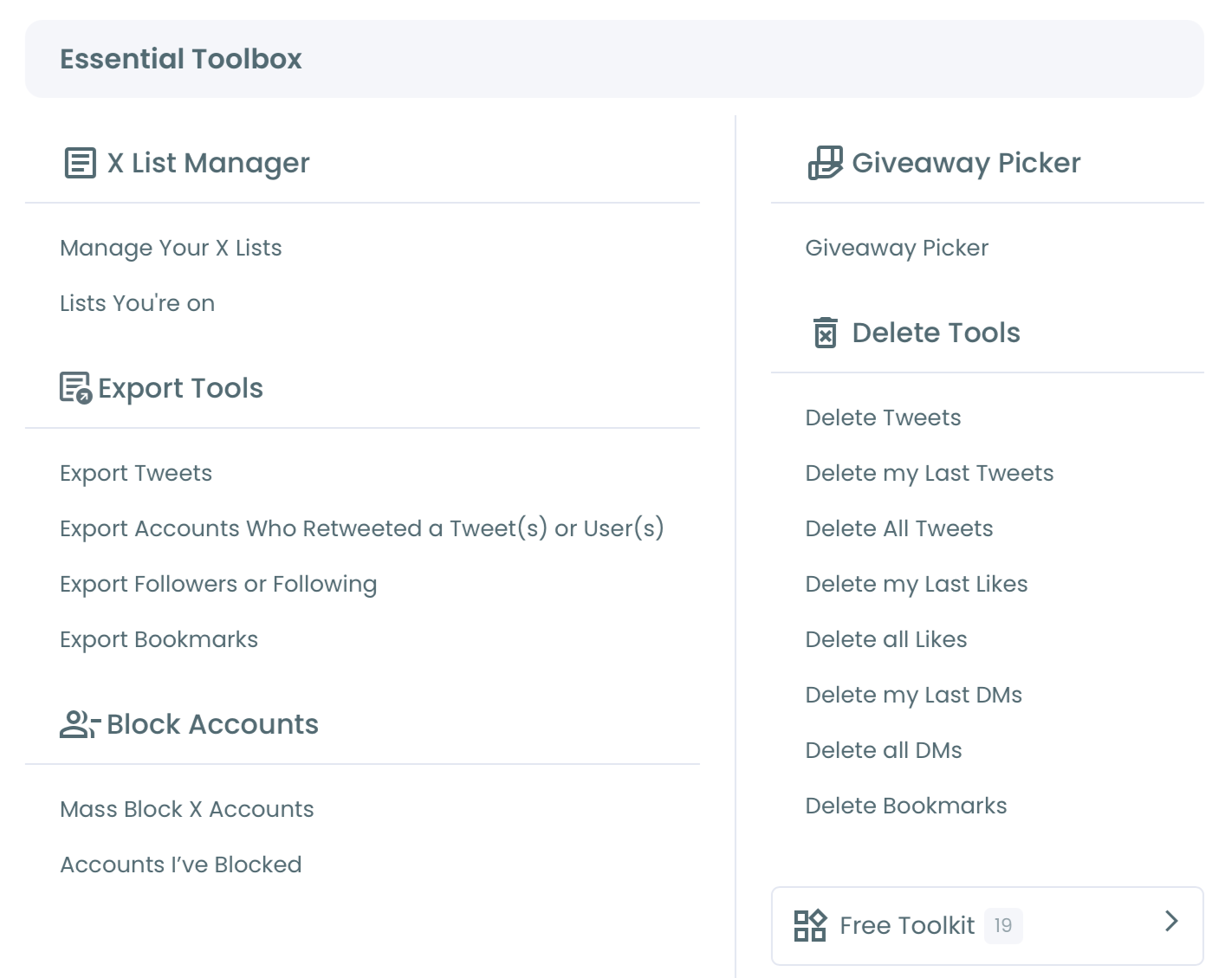
- Open the Essential Toolbox menu and select the delete tools, where your recent posts load automatically.
Filter by hashtag, then protect your winners
- Enter your hashtag in the keyword filter and apply it, so only tweets containing that tag stay in the selection.
- Set a minimum like or retweet threshold before deleting, so high-performing posts from that campaign are excluded and only the weak ones go.
That order is what makes the run safe. Logging in earns sanctioned API access first, and the hashtag filter narrows the scope before you touch anything. The engagement threshold acts as a second net, so the one tweet from that campaign that actually landed never gets swept up with the rest. Skip the threshold and you risk deleting your best post alongside the dead weight.
Video walkthrough: how the multi-tweet selection and filter run inside Circleboom before a single deletion is confirmed.
The recent-tweets path reaches up to your latest 3,200 posts directly through the API, with no archive upload. If your hashtag sits further back, the same filter works after you upload your X archive. You can request that archive from your account settings per the download your X archive help page. Either way, the hashtag filter behaves identically.
The Engagement Layer Most Guides Ignore
Here is the part competitor walkthroughs miss entirely: a hashtag campaign is rarely all bad. Some of those tweets flopped and some earned real engagement, and a flat "delete everything with this tag" treats them the same. The smarter move is to keep the proof and clear the noise.
Set a maximum-like ceiling and Circleboom deletes only the low performers under it. Set a minimum and your strongest post survives while the filler disappears. This is the same logic behind removing low-engagement tweets more broadly, applied to a single hashtag's worth of content. You can also export the matched set to CSV first, so you keep a record of exactly what came off before it is permanently gone.
The threshold is not limited to likes. The filter panel sets a minimum and maximum range on retweets, replies, quotes, bookmarks, and impressions too. So a campaign tweet that earned few likes but drove a lot of clicks can still be spared by an impression floor, and a post that only collected reply-guy noise can be cleared even if its like count looks healthy.
You pick the metric that actually defines a winner for that campaign, not just the one that is easiest to see.
Here is a worked version. Say `#SummerSale` produced thirty tweets and you want everything under fifty likes gone. You enter the hashtag, set the maximum-like field to forty-nine, and apply. The list now shows only the sub-fifty posts. The two announcement tweets that cleared a few hundred likes are excluded automatically and never enter the delete batch. You export that filtered set, confirm, and the thirty becomes the handful that were dragging while the proof stays live.
Once the hashtag set is handled, the same dashboard lets you tidy adjacent clutter. You might want to clear the whole window the campaign ran in, which the guide on how to delete tweets by date walks through.
You can also pull wider context from the guide on how to delete tweets by keywords and hashtags. The deeper walkthrough on removing tweets with Circleboom covers the full filter set in one place.
What Changes After the Hashtag Is Gone
Your profile reads current again. A visitor scrolling your recent tweets no longer hits a wall of an expired campaign tag, and your hashtag's own search results stop surfacing your stale posts. For a brand handing the account to a new manager or pivoting to a fresh campaign, that clean break matters more than the few posts themselves.
There is a reach angle too. Old, dead-tag tweets do nothing for your current engagement rate, and clearing them tightens the signal of what your account is actually about right now.
The reasoning behind that cleanup-for-reach effect is laid out in the piece on how deleting old tweets can increase your reach. A hashtag cleanup is the most targeted version of it.
If a single hashtag overlapped a clear time window, pairing it with the delete tweets by date filter clears the block cleanly. When you are ready, you can delete tweets that contain a specific hashtag and reset that part of your timeline in minutes.
FAQ
Can I delete tweets with a hashtag without deleting my other posts?
Yes. The hashtag filter selects only posts containing that exact tag, so everything else stays untouched. Review the matched list before confirming to be sure the scope is right.
Does deleting by hashtag also remove the hashtag from other people's tweets?
No. You can only delete your own posts. Replies, quote tweets, and mentions from other accounts that used the same hashtag remain on X and are outside your control.
Is it safe to bulk delete tweets by hashtag on X?
Yes. Circleboom runs every deletion through sanctioned API access and paces large batches within the platform's rate limits, so your account stays compliant. Deletion is permanent, so export the set first if you want a backup.
What if my hashtag tweets are older than my recent history?
Use the archive path. Upload your X archive and apply the same hashtag filter to reach posts beyond the 3,200-tweet API window, including hashtags from years back.
Can I run more than one engagement filter at the same time?
Yes. The filter panel lets you stack conditions, so you can set a like floor and an impression floor together on the same hashtag. Every condition narrows the same selection, which means you can be as precise as the campaign needs without running separate passes.
The Bottom Line
Deleting tweets that contain a specific hashtag comes down to one filtered run plus one safety layer: match the tag, set an engagement threshold so your winners survive, and confirm. X gives you no native way to do this, so a compliant tool with a real hashtag filter is the only path that does not eat an afternoon. The engagement filter is the difference between a cleanup that protects your best work and one that flattens everything.
Start your hashtag cleanup here: → delete tweets that contain a specific hashtag