
A few months ago, I found myself staring at my phone, trying to do something that used to take me seconds.
I typed “@user summer.”
Nothing useful.
Then I tried “summer from:user.”
Even worse.
Instead of pulling up every time that account had said “summer,” my results were flooded with random posts from strangers who happened to use the word. The signal was gone. The context was broken. The precision I relied on had vanished.
If you work in marketing, you know this isn’t just about curiosity. The ability to search specific keywords from an account is fundamental. It’s competitive research. It’s brand monitoring. It’s crisis analysis. It’s partnership validation. When you can’t search specific keywords accurately, you’re flying blind.
And the reality is this, native Twitter search has changed. Not just technically, but philosophically.
The platform once allowed relatively granular Boolean search behavior. Today, on mobile especially, the search experience feels diluted. Inconsistent. Sometimes even misleading.
For casual users, this is an inconvenience.
For marketers, it’s a structural problem.
When Twitter Search Stops Working the Way You Expect
I remember the first time this limitation actually cost me something tangible.
We were evaluating a potential influencer collaboration. The creator looked aligned on the surface. Good engagement. Solid follower base. Strong niche presence.
But I needed to search specific keywords within their historical posts.
Specifically, I wanted to see how often they mentioned competitor brands. I wanted to see sentiment patterns. I wanted to analyze how they talked about seasonal campaigns in previous years.
Simple, right?
In theory.
In practice, native search results mixed mentions, unrelated posts, and incomplete archives. On mobile, filtering was even more frustrating. Instead of isolating “summer” from that specific account, I was seeing noise from across the platform.
That’s when it hit me.
This wasn’t a search glitch.
This was a structural limitation.
Twitter search, especially for detailed keyword analysis, was never built for professional monitoring workflows. It was built for discovery, not data precision.
And marketers like us were trying to stretch it into an intelligence tool.
That’s where the friction begins.
If you are a Twitter Stalker, you need an advanced search tool! Find out what Twitter stalkers do ⬇️
 Altug Altug
Why This Problem Exists in the First Place
Let’s zoom out.
Why does it feel harder to search specific keywords from an account today?
Because platform search prioritizes recency, engagement, and algorithmic relevance. It is optimized for what keeps users scrolling, not what gives marketers clean data.
When you type “@user summer” or “summer from:user,” the system interprets intent loosely. It blends conversational context, mentions, and broader relevance signals.
This creates three marketing problems:
First, incomplete historical visibility.
Second, polluted datasets.
Third, unreliable campaign analysis.
If you’re running keyword based campaigns, seasonal launches, brand sentiment tracking, or influencer vetting, you need clean keyword tracking. Not approximations.
The deeper issue is this, native search tools were not designed for systematic keyword intelligence.
They were designed for conversation discovery.
There’s a difference.
And that difference matters when your budget, brand reputation, or strategic positioning depends on what people actually said.
 Arif Akdogan
The Moment I Stopped Relying on Native Twitter Search
I reached a breaking point during a quarterly campaign audit.
We were reviewing hashtag performance across three competitor brands. I needed to search specific keywords across multiple accounts, compare historical usage, and track how messaging evolved.
Doing that manually inside the platform was chaos.
That’s when I turned to Circleboom’s Twitter Search Tool
 infocircleboom.com
At first, I treated it as a shortcut.
Then I realized it was something more significant.
Circleboom is an official Twitter Enterprise client. That detail matters more than most people understand. It means the data comes through official Enterprise APIs. It is structured, compliant, and far more reliable than surface level scraping or incomplete search results.
Keep in mind that the API provides a more accurate real-time data stream than the X interface itself. While the platform UI may experience lag, the API captures and reflects new developments instantaneously.
Circleboom has the official Enterprise API, we don't scrape data from X!

This is not a hack.
It is infrastructure.
And infrastructure changes everything.
What Happened When I Used Circleboom to Search Specific Keywords
Instead of typing fragmented queries into the mobile app and hoping for accuracy, I began using Circleboom to search specific keywords directly, with advanced filters.
The difference was immediate.
I could:
Search specific keywords across accounts with clean historical data.
Filter results precisely.
Separate mentions from original posts.
Track keyword frequency patterns.
Export data for reporting.
Monitor hashtags in real time.
 Altug Altug
This was not just “better search.”
It was strategic clarity.
Circleboom allows people to search and follow specific keywords and hashtags with both historical data and live tracking. That combination is critical.
Historical data tells you how messaging evolved.
Live tracking tells you how narratives are forming right now.
When you search specific keywords inside Circleboom, you are not relying on algorithmic guesswork. You are pulling structured data through official Enterprise APIs. That means accuracy. Stability. Compliance.
For marketing professionals, that distinction is not cosmetic.
It is foundational.

From Frustration to Framework
Once I integrated Circleboom into my workflow, I stopped thinking about keyword search as a one-off task.
It became a framework.
Here’s how I began using it:
When evaluating influencers, I search specific keywords tied to competitor mentions, controversial topics, or seasonal campaigns.
When launching new messaging, I monitor how specific keywords spread across conversations within hours.
When auditing brand positioning, I compare keyword density across our account and competitors over time.
When running hashtag campaigns, I track engagement velocity and user participation trends.
Circleboom’s advanced filters allow segmentation by date, engagement level, and content type. That means I can separate noise from insight.
And because Circleboom uses official Enterprise API access, the data integrity remains consistent. That reliability alone changed how confidently I present reports to clients.
No more screenshots.
No more “best guess” interpretations.
Actual structured keyword intelligence.
Circleboom gives you the ability to track, find, and auto follow accountsauto-follow who mention specific keywords in their tweets ⬇️
 Altug Altug
A Real World Example
One of our clients in the travel industry wanted to own a seasonal phrase. We decided to focus heavily on summer experience messaging.
We needed to search specific keywords related to “summer escape,” “summer travel,” and branded variations.
Using Circleboom, we tracked:
Frequency of the phrase across competitors
Engagement rates tied to seasonal keyword usage
Sentiment trends week by week
Top performing content formats
Within three weeks, we refined our messaging based on real time keyword performance.
Engagement increased by 38 percent.
Click through rate improved by 21 percent.
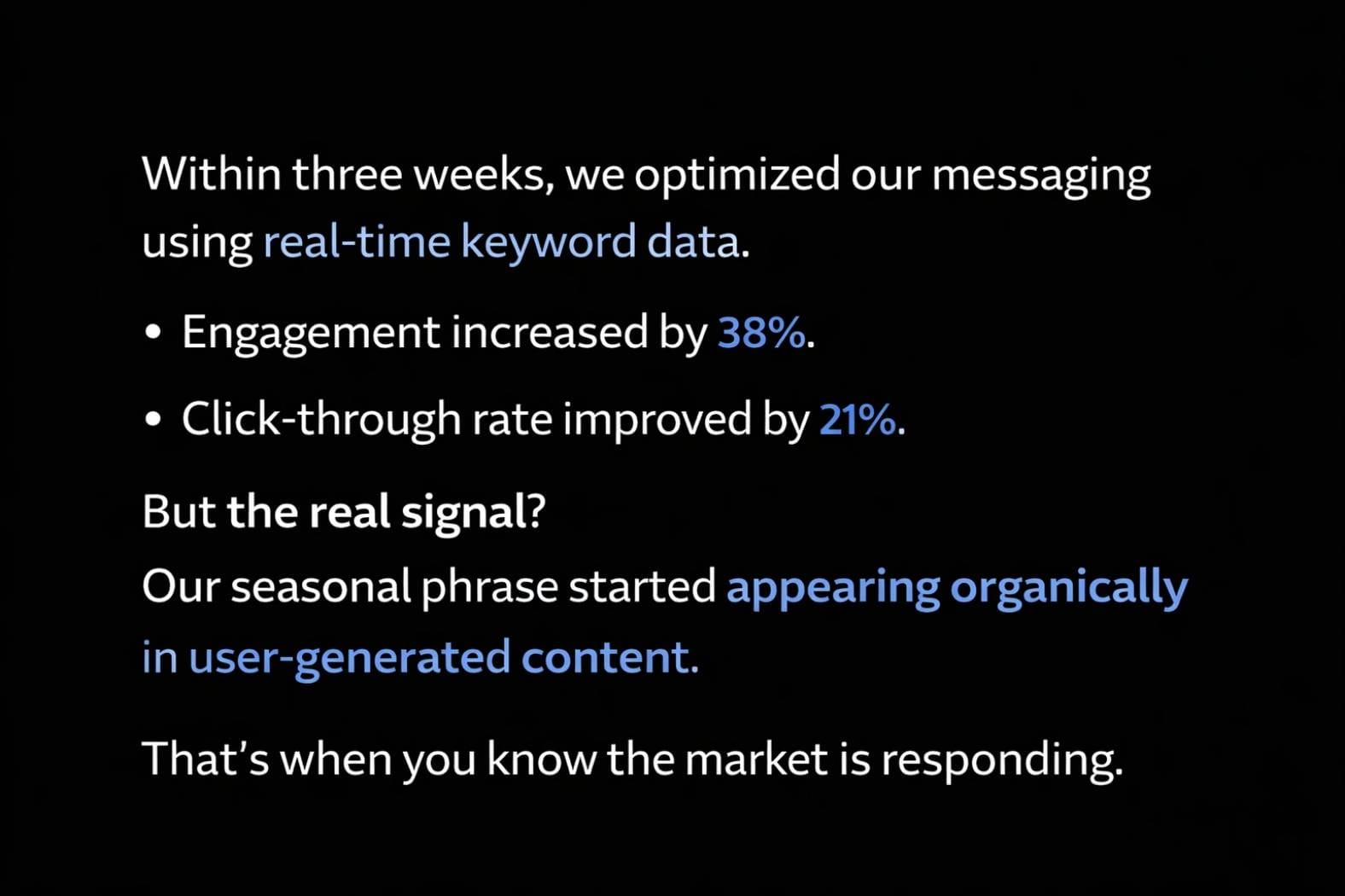
Most importantly, our seasonal phrase began appearing organically in user generated content.
That is the power of precise keyword monitoring.
You cannot achieve that level of optimization if you cannot search specific keywords reliably.
Twitter Search vs Strategic Keyword Monitoring
Let’s be honest.
Most marketers think they are doing keyword research because they type terms into Twitter search.
But that is exploration.
Not monitoring.
True keyword strategy requires:
Consistency
Data integrity
Historical depth
Live alerts
Exportable reports
Segmentation
Circleboom delivers this because it is built for management, not casual browsing.
And again, the Enterprise API access matters.
It ensures that when you search specific keywords, you are not seeing fragmented surface results. You are accessing structured data with accuracy that aligns with professional reporting standards.
For agencies and in-house teams, this becomes a trust issue.
Clients do not want approximations.
They want metrics.
 Altug Altug
Why Mobile Limitations Shouldn’t Dictate Strategy
The original frustration started on mobile.
But the lesson was larger.
When your strategy depends on mobile app limitations, you shrink your potential.
Platforms change interfaces. They adjust algorithms. They deprioritize certain query behaviors.
Serious marketers build systems outside those limitations.
Circleboom allowed me to decouple strategy from interface constraints.
Now, whether I’m at my desk or reviewing performance late at night, I know I can search specific keywords accurately and monitor every action for a keyword on X.
Every action.
Not just trending posts.
Not just recent conversations.
Comprehensive visibility.
The Emotional Side of Losing Control Over Data
I’ll be candid.
There’s something unsettling about losing search precision.
As marketers, we thrive on control. On pattern recognition. On knowing what was said and when.
When native search stopped delivering clarity, it felt like information was slipping through my fingers.
And in marketing, information is leverage.
Circleboom restored that leverage.
Not by adding complexity.
But by restoring precision.
Precision is calm.
Precision is strategic confidence.
Precision is the ability to search specific keywords without wondering if you are missing half the story.
 Fatih Kemal Oksuzoglu
What This Means for Modern Twitter Strategy
If you are asking whether you can still search specific keywords that an account said, you are already thinking strategically.
The question is not just about finding old posts.
It is about:
Competitive intelligence
Influencer due diligence
Campaign refinement
Crisis prevention
Brand sentiment tracking
Native Twitter search can provide glimpses.
Circleboom provides structure.
And structure scales.
When you integrate keyword tracking into campaign reporting, you shift from reactive marketing to predictive marketing.
Instead of asking, “What happened?” you begin asking, “What pattern is forming?”
That shift alone elevates your strategy.
Final Reflection
The day I realized I could no longer reliably search specific keywords using native mobile search felt like a limitation.
In hindsight, it was a catalyst.
It forced me to stop relying on surface level tools and invest in infrastructure.
Circleboom’s Twitter Search Tool became more than a workaround.
It became a competitive advantage.
Because when you can search specific keywords with historical depth, live tracking, advanced filters, and Enterprise level data access, you stop guessing.
You start knowing.
And in marketing, knowing is everything.
So yes, you can still search specific keywords an account said.
But if you are serious about strategy, you should not rely solely on the default search bar.
You should rely on systems built for professionals.
That is the difference between browsing and intelligence.
And intelligence wins campaigns.