
Affiliate marketing with Twitter does not work by blasting your links into an empty timeline. It works when you find the accounts that are already asking the exact question your affiliate product answers, then show up with a genuinely useful reply that happens to include your recommendation. The link is the last step, not the first one.
The mistake most affiliates make is treating X as a broadcast channel. They post a link, tag a product, and hope. The accounts most likely to click a recommendation are the ones who tweeted "which CRM should I switch to?" or "anyone got a good VPN?" this week, and you cannot find those people by posting into the void.
Affiliate marketing with Twitter starts with discovery, not distribution. Circleboom's Real-time and Historical Tweet Search find the accounts posting buyer-intent questions on X through official, sanctioned API access, so you can reply where the interest already exists instead of guessing who might care. Disclose the affiliate relationship, add real value, and the link earns the click.
→ affiliate marketing with Twitter
Below: how to surface live buying signals, research a niche's recurring questions, and engage without spamming.
Most guides on this topic stop at "share your links and use hashtags." The gap they leave is targeting. A hashtag reaches whoever happens to browse it; a buyer-intent search reaches the specific person who said, in their own words, that they are shopping for exactly your category right now. That difference is the whole game.
Circleboom closes the gap by letting you search X by what people actually posted, not by who they claim to be in a bio. You find the tweet that expresses the need, then the account behind it, and you engage from a position of relevance instead of cold noise.
Why Buyer Intent Beats Hashtag Spraying
The accounts worth reaching for affiliate content are the ones expressing a live buying signal. Someone tweeting "looking for a good email marketing tool, budget is tight" has told you their category, their constraint, and their timing in fourteen words. That is a warmer lead than any follower you could buy or any hashtag audience you could spray.
Hashtag spraying does the opposite. It reaches a broad, unfiltered crowd, most of whom have no active need, and it trains the algorithm to read your account as a link dumper. Reach without relevance is just noise that suppresses your future posts.
There is a compliance dimension too. The FTC requires affiliates to disclose paid relationships clearly, and a reply that says "I use this myself, here's my affiliate link" reads as honest when it answers a real question. The same link dropped on a stranger who never asked reads as spam, and X's spam systems agree. If your posts are already landing flat, this look at why your followers are not engaging is worth reading before you change your affiliate approach.
The pattern that works is simple to state and hard to fake: find the question, answer it usefully, disclose the relationship, and let the value carry the link. Everything below is about finding the question at scale.
Two Kinds of Signal: Live Intent and Recurring Pain
Affiliate discovery on X splits into two searches, and Circleboom runs both. One captures what people are asking right now; the other maps what a niche keeps asking over time.
- Real-time Tweet Search captures live buying intent. Set a keyword like "recommend a project management app," anchor it to the last 24 hours or 7 days, and collect the accounts posting that signal as it happens. The window is short, so you reach the person while the decision is still open.
- Historical Tweet Search researches a niche's recurring questions. Scope a search across the past year for "which standing desk should I buy" and you see the pattern: the exact wording people use, the objections that repeat, the products they already compared. That research shapes the content you create.
Live intent tells you who to reply to today; historical pain tells you what content to build for the whole niche. Used together, they turn X from a guessing game into a targeting system. Circleboom is an official X Enterprise Developer, so both searches pull full, structured tweet data through approved access rather than a scraper that risks your account.
For a broader view of what structured search can find, this complete guide to Twitter advanced search covers the query mechanics that sit underneath the affiliate use case.
How to Do Affiliate Marketing With Twitter Using Tweet Search
To run affiliate marketing with Twitter through tweet search, you find the conversations first, extract the accounts behind them, then engage with disclosed, useful replies. The workflow below runs both the live-intent pass and the niche-research pass through official API access, so every account you reach was placed there by something they actually said.
See it live: how a live keyword like "looking for a tool" surfaces accounts posting a buying signal you can reply to today.
Here is the flow, in order.
Connect your X account and open the search
- Log in to Circleboom Twitter and connect your X account with official OAuth.
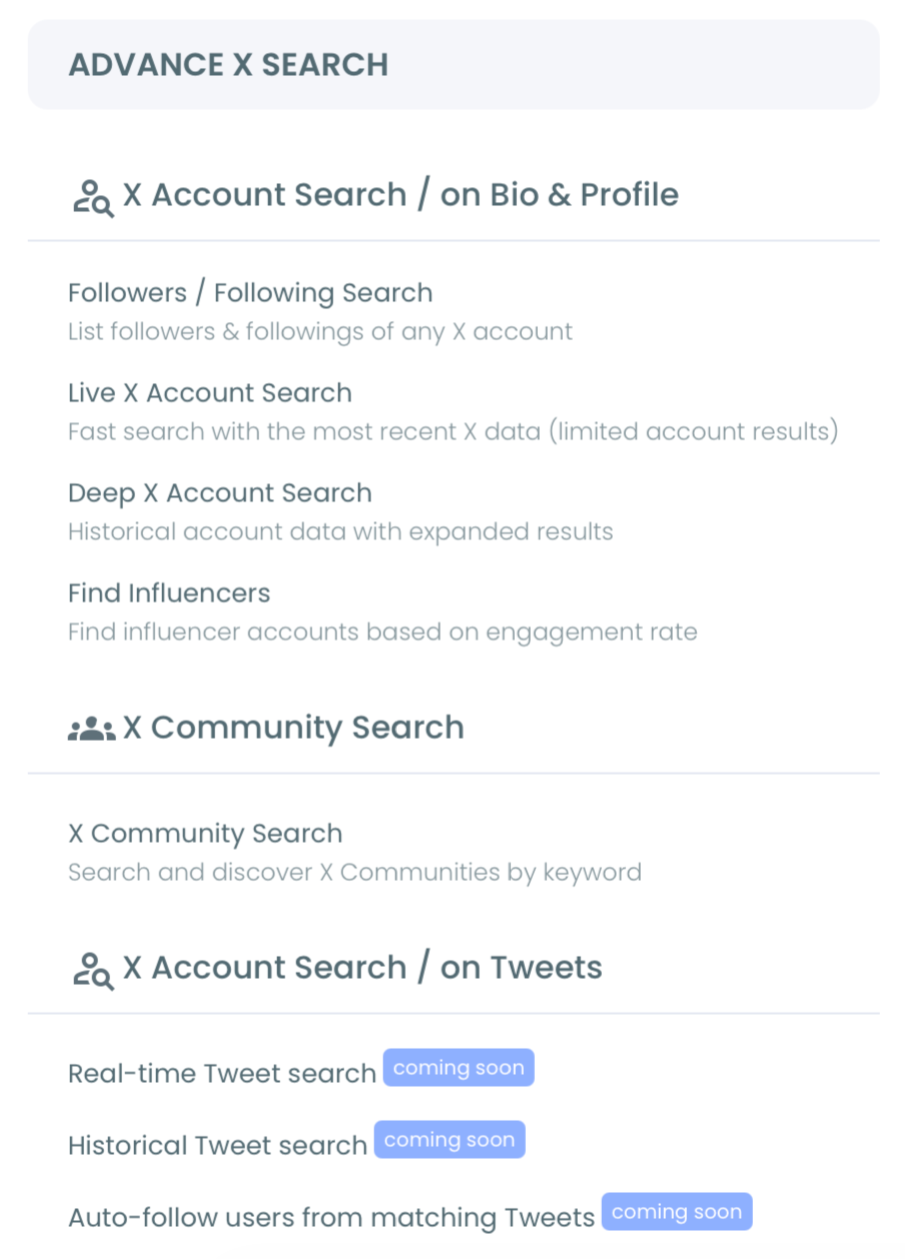
- Open the Advanced X Search menu where Real-time and Historical Tweet Search both live.
Find live buying intent with Real-time Tweet Search
- Write the buying-signal query in plain language. Describe the request the way a shopper would type it, such as "recommend a good CRM for a small team," and let the AI suggest refined variations.
- Set the start date to the last 24 hours or 7 days so you capture only accounts posting the signal while the decision is still open.
- Apply filters to cut noise. Set an engagement minimum, choose a language, and exclude terms that pull in irrelevant chatter, then switch to the profile view to see the accounts behind the matching tweets.
Research the niche with Historical Tweet Search
- Run the same category keyword across a longer window. Scope Historical Tweet Search to the past year for "which [product category] should I buy" and read the recurring questions, objections, and comparisons the niche keeps making.
- Export or list the strongest accounts for follow-up, and use what you learned to plan replies and content that answer the pattern, not just one tweet.
That order works because it front-loads relevance before outreach. The live search finds who to engage today, the historical search tells you what the niche actually cares about, and the profile view lets you check each account before you act, so you never reply blind or follow low-signal accounts at scale. Skip the search step and you are back to spraying links at strangers.
At a glance: connect, search live intent, filter, research the niche, then engage with a disclosed and useful reply. The discovery does the targeting so your effort goes into the value of the reply.
Engage Honestly, Not Aggressively
Finding the conversation is only half the work; the reply is where trust is won or lost. The accounts you surface expressed a need, so your job is to answer that need first and mention your affiliate product second, with the relationship disclosed.
A useful reply names the specific product, explains why it fits their stated constraint, and includes a clear "affiliate link" or "#ad" tag. That disclosure is not a weakness. Readers trust an affiliate who is upfront far more than one who hides the arrangement, and honest disclosure is what keeps your account on the right side of both the FTC and X's rules.
Avoid the temptation to automate this into a link-blasting machine. Following everyone who mentions a keyword and dropping the same reply is the fastest way to get flagged. Once you have identified real prospects, you can automate your Twitter outreach at a safe, paced cadence, but the message still has to read like a human answering a human.
When you want to widen the pool beyond direct questions, Find Twitter Influencers pulls the accounts with reach in your niche, and the profile data behind any tweet search, exportable from the tweet export tool, gives you a clean list to prioritize.
What You Gain From Search-First Affiliate Marketing
A search-first approach changes the economics of affiliate marketing with Twitter. Instead of a low conversion rate spread across an untargeted crowd, you get a smaller number of highly relevant conversations where the reader already wants what you are recommending.
The compounding benefit is reputation. When you consistently show up in the right threads with genuinely helpful answers, your account becomes known as a trustworthy source in the niche, which lifts every future recommendation. That reputation is worth more than any single click.
There is a strategy dimension too. The recurring questions you find in historical search are a content roadmap, telling you which comparison threads, which product breakdowns, and which objections to address in your own posts. If you are weighing where to focus your affiliate energy across networks, this survey of the best platforms for affiliate marketing helps set expectations for what X can and cannot do, and this deeper piece on affiliate marketing on Twitter pairs directly with the discovery workflow above.
Because both searches run on official Enterprise access, you build this system without gambling your account on a scraper that X could ban. Reliable data plus honest engagement is what makes the model durable instead of a one-week spam experiment.
The Bottom Line
Affiliate marketing with Twitter is not a distribution problem. It is a discovery problem. The affiliates who win are the ones who find the person already asking the question, answer it honestly, and disclose the relationship, and tweet search is how you find that person at scale instead of one lucky reply at a time.
Circleboom turns that discovery into a repeatable workflow, pulling live buying signals and mapping a niche's recurring pain through official Enterprise access, so your links land where the interest already exists. When you're ready, start your Twitter affiliate marketing with the search that finds real intent.
→ Build your affiliate marketing on Twitter with Circleboom
Common Questions About Affiliate Marketing on Twitter
Is it against the rules to post affiliate links on X?
Affiliate links are allowed on X as long as you disclose the relationship and do not spam. The rules to respect are simple: tag paid recommendations clearly with something like "affiliate link" or "#ad" per FTC guidance, and do not blast the same link at accounts who never asked. A disclosed link inside a genuinely helpful reply to a buyer-intent tweet is compliant; a mass-dropped link on strangers is the pattern X's spam systems catch.
How do I find people who actually want to buy in my niche?
Search by what people posted, not by their bio. Circleboom's Real-time Tweet Search captures accounts posting live buying signals like "recommend a good [product]" from a start date you choose, and Historical Tweet Search finds the recurring purchase questions a niche has asked over the past year, both through official X Enterprise access. You reply to accounts who already expressed the need, which converts far better than posting a link and hoping.